

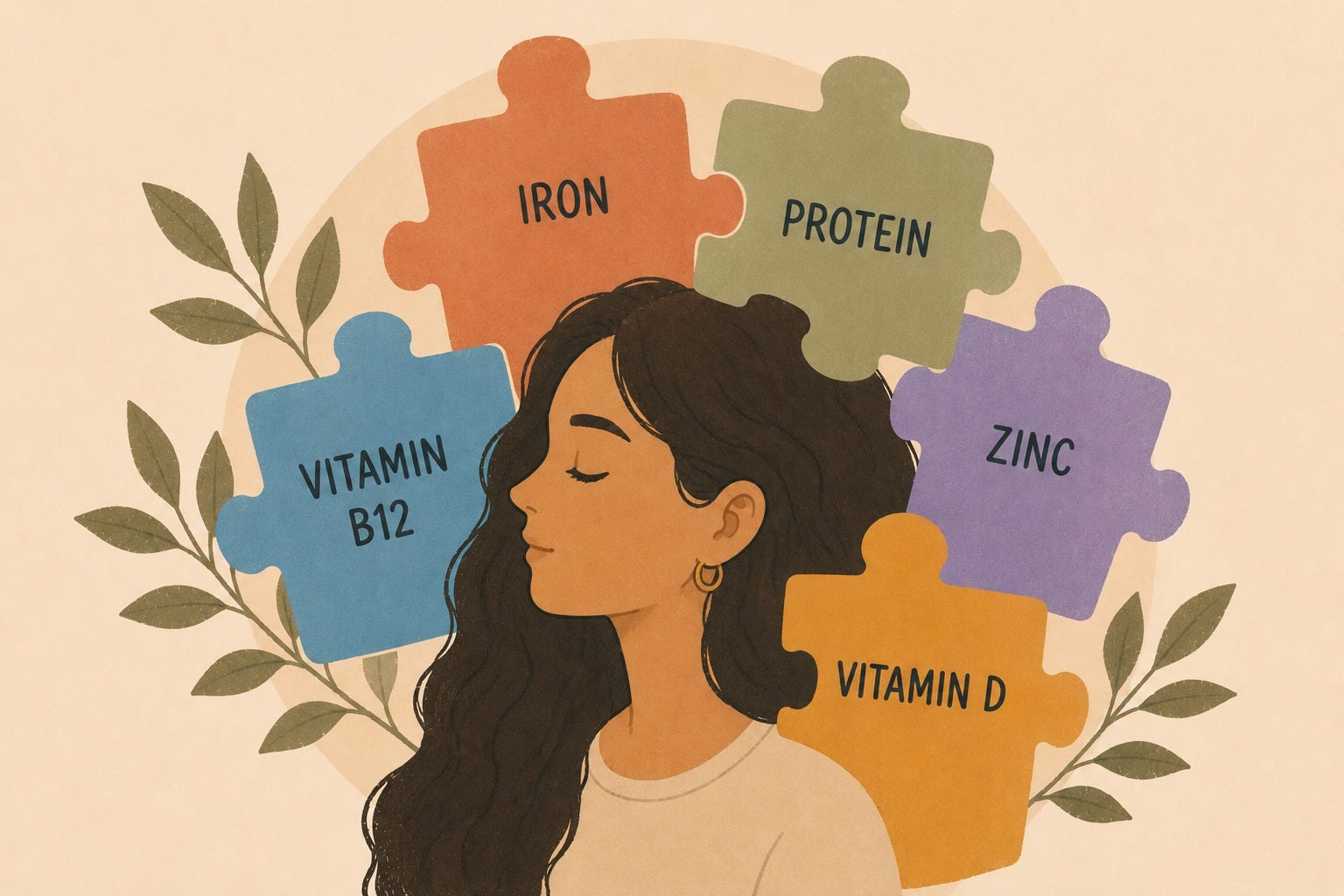
You’ve tried every shampoo. Switched to silk pillowcases. Stopped using heat. But your hair is still falling out - clumps in the shower drain, strands on your pillow, handfuls when you brush.
Here’s what nobody’s telling you: your hair isn’t falling out because of what you’re putting on it. It’s falling out because of what’s missing from inside.
Why It Happens More After 35
Hair follicles are some of the most metabolically active cells in your body - they need a constant supply of nutrients to grow.1 When those nutrients run low, your body makes a choice: prioritize vital organs like your brain and heart, or your hair. Hair loses every time. Growth shuts down. And three months later, you see the fallout.2
For women over 35, this happens more often because of heavier periods depleting iron, declining estrogen affecting how well you absorb nutrients, and years of restrictive dieting that created hidden deficiencies you didn’t even know existed.3
Iron: What Your Blood Test Isn’t Showing You
If you’re exhausted all the time and losing hair, iron deficiency is likely the culprit.3
Iron carries oxygen to your hair follicles. Without enough oxygen, follicles can’t produce new hair. Your body stores iron in a protein called ferritin - think of it as your iron bank account that gets tapped when your body needs iron for making red blood cells and supporting hair growth.1
Here’s what you might not know: your hemoglobin can be normal while your ferritin is low. Hemoglobin measures the iron currently circulating in your blood. Ferritin measures your iron reserves i.e. the stored iron waiting to be used. Your body will maintain normal hemoglobin levels by draining your ferritin reserves first, which means you can have “normal” blood work while your hair is literally starving for iron.1
One study found women with hair loss had significantly lower ferritin than women without, even when their hemoglobin looked perfectly fine.1
The threshold matters: ferritin below 40 ng/mL causes hair shedding. But most labs call anything above 12-15 ng/mL “normal” because it’s enough to prevent anemia, not enough for healthy hair growth.4 If your doctor says your iron is “fine,” ask for the actual ferritin number. If it’s under 40, you’ve found your answer.
Where to get iron: Red meat, liver, and shellfish like oysters and clams are the best sources because they contain heme iron, which your body absorbs easily (15-35% absorption rate).5 If you’re vegetarian, focus on lentils (dal), kidney beans (rajma), and chickpeas, but pair them with vitamin C-rich foods like lemon juice, tomatoes, or bell peppers - vitamin C can increase iron absorption from plant foods by up to 300%.5
Why not spinach? Plant sources contain non-heme iron, and spinach specifically has compounds called oxalates that bind to the iron and prevent your body from absorbing it. You absorb less than 5% of the iron in spinach, making it one of the poorest iron sources despite its reputation.6
Protein: You’re Probably Not Eating Enough
Once you understand iron, protein becomes the next piece of the puzzle. Hair is 95% keratin, a structural protein. If you’re not eating enough protein, your body literally doesn’t have the building blocks to make new hair strands.
Women over 35 need about 20-30g of protein per meal. Most Indian women get half that. Roti with sabzi isn’t enough. Your body can only use a certain amount of protein at once, so spreading it across meals matters more than just hitting a daily total.
Actual protein sources: One egg has 6g, 100g chicken has 25g, 100g dahi has 4g, 100g greek yogurt has 10g, 100g paneer has 18g, one cup of cooked dal has 9g. Do the math on what you ate today, you’ll probably realize you’re coming up short.
Zinc: The One That Gets Overlooked
Zinc regulates how hair follicles grow and repair themselves. When you’re deficient, hair becomes brittle and sheds excessively. Studies show that zinc supplementation in deficient people can reverse hair loss within months.3
But here’s the catch: over-supplementing zinc can also cause hair loss because excess zinc interferes with copper absorption, and copper is also essential for hair health. Too much of either mineral throws the other out of balance.4 This is why you shouldn’t just start popping zinc supplements without knowing if you’re actually deficient. Get tested first.
Food sources are safer: Pumpkin seeds, cashews, chickpeas, and shellfish. A small handful of pumpkin seeds or cashews daily is usually enough to maintain healthy zinc levels without overdoing it.
Vitamin D: 80% of Indians Are Deficient
Vitamin D plays a direct role in hair follicle cycling - it literally helps activate the cells that form new hair.2 Low vitamin D levels are strongly linked to hair loss, especially in women. And yet, despite living in a sunny country, 80% of Indians are deficient.
Getting 15-20 minutes of midday sun on your arms and legs helps, but for most people, it’s not enough. If your vitamin D levels are low (and they probably are), supplementation makes sense. This is one of those nutrients where supplementing what you can’t reasonably get from food is not just okay, it’s necessary for most people.
B12: If You’re Vegetarian, Pay Attention
B12 helps red blood cells deliver oxygen to your hair follicles. Without it, follicles can’t function properly, leading to thinning and shedding. The problem? B12 is found almost exclusively in animal products, which means vegetarians are at very high risk for deficiency.2
Sources: Eggs, dairy, fish, and chicken. If you’re vegetarian and not eating eggs or dairy regularly, you almost certainly need a B12 supplement. Like vitamin D, this isn’t about replacing a good diet with pills. It’s about filling a gap that’s not possible to fill through food alone when you don’t eat meat.
What to Do Right Now
The fix isn’t complicated, but it does require action:
1. Get tested. Check for ferritin (should be above 40 ng/mL, not just “normal”), vitamin D, B12, and zinc. Don’t accept “everything’s fine” without seeing the actual numbers. Write them down. Compare them to the thresholds that matter for hair health, not just anemia prevention.
2. Fix your plate. Aim for 20-30g of protein per meal. Eat iron-rich foods - if vegetarian, always pair them with vitamin C. Include zinc from seeds or nuts daily.
3. Supplement smartly. Most people genuinely need vitamin D and B12 supplementation, especially vegetarians. That’s okay. Supplements aren’t cheating, they’re filling gaps that modern diets and lifestyles create. But they work best alongside a nutrient-dense diet, not as a replacement for one. Don’t take random supplements hoping they’ll help. Test first, supplement second, and focus on food first wherever possible.
4. Be patient. Hair grows about half an inch per month. Once you correct a deficiency, it takes 3-6 months to see improvement because you’re waiting for new, healthier hair to grow in. This isn’t a quick fix. But it’s a real one.
The Bottom Line
Your expensive anti-hairfall shampoo isn’t the problem. And switching to another expensive shampoo won’t fix it.
Hair loss after 35 is almost always about what’s missing inside - iron (specifically ferritin), protein, vitamin D, B12, zinc. Your body is literally telling you something every time you see hair in the drain. The question is: are you listening?
References: