

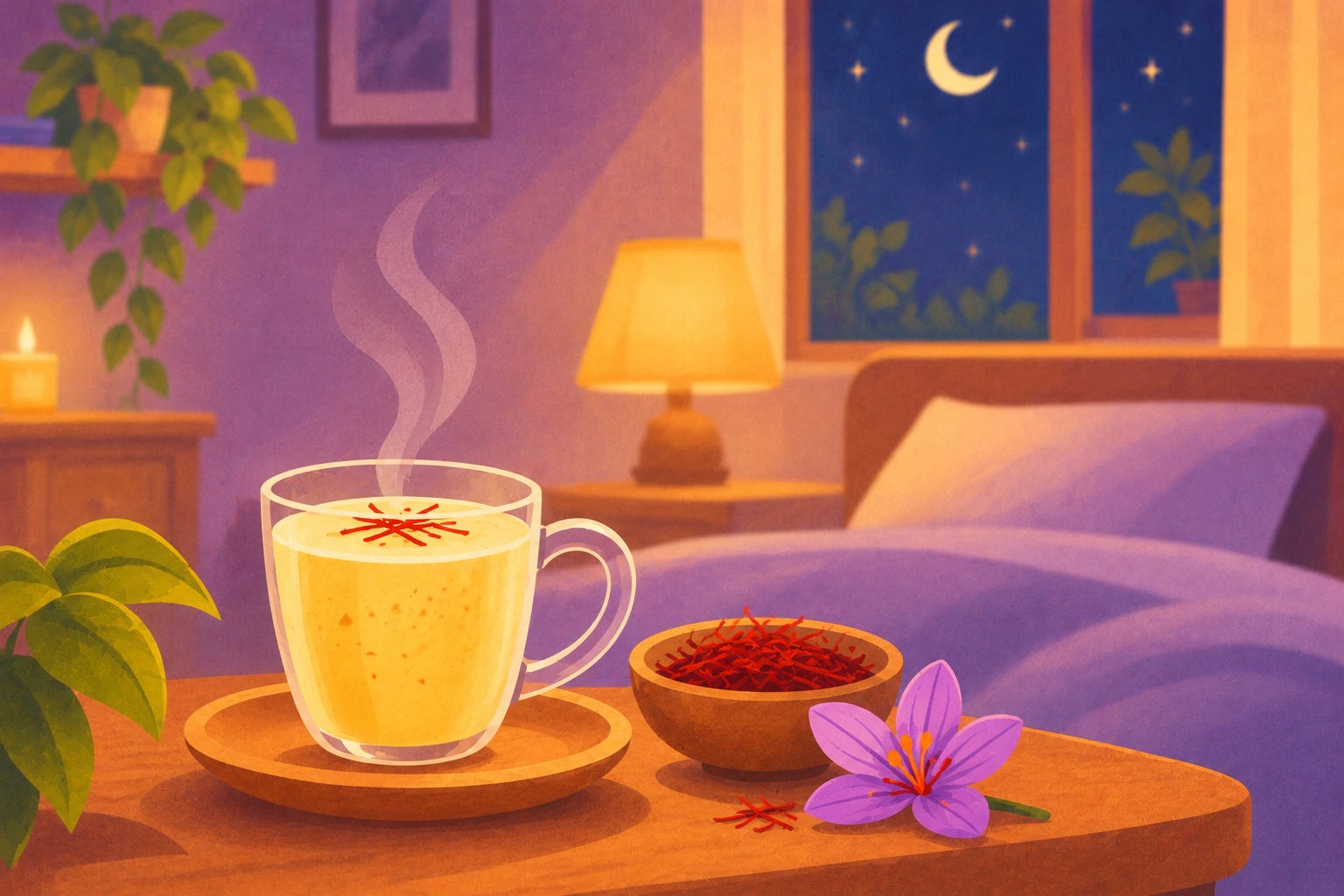
Think back to bedtime in many Indian homes. A glass of warm milk, a few strands of kesar floating in it, and someone, maybe a nani, a dadi or a mother, saying, “Drink this, you’ll sleep well.” Nobody ever asked why. It was simply what you did.
It turns out researchers have been curious about it for a while. And what they’ve found is rather interesting.
What’s in those little red threads
Kesar comes from the delicate stigmas of the Crocus sativus flower, and its colour and aroma come from plant compounds called crocin and safranal. Scientists became curious about them because they seem to influence the brain chemicals linked to mood and sleep.1
So the natural next question was: does it actually show up in the way people sleep?
What happened when they put it to the test
In one study, 63 healthy adults who struggled with sleep took a standardised saffron extract twice a day for 28 days. Their sleep quality had improved within the first week.1
A larger study followed 120 adults with unsatisfactory sleep. They took either 14 mg or 28 mg of the extract an hour before bed for 28 days, and once again the results pointed towards better sleep.2 And when researchers gathered several trials together in a 2022 review, the same message came through: saffron improved sleep quality.3
It isn’t only about sleep
Saffron has been looked at for mood too. A 2026 review pooled 34 trials and nearly 1,800 adults, and found that people taking saffron reported lower scores on common measures of depression and anxiety. The researchers described it as a promising complement to care.4
And then there’s how you feel the next day, which is what most of us really care about. In a 2026 trial of women aged 50 to 70 with low mood and poor sleep, the clearest gains were in the daytime: less tiredness, better alertness and concentration, and a better mood.4 Which, if you think about it, is what we all want from a good night’s sleep: to wake up feeling like ourselves.
So, does a pinch in your milk count?
Here’s the honest, gentle answer. It’s a lovely ritual, and nothing about it needs to change. But the studies used standardised extracts with a measured amount of the active compounds, and they haven’t tested kesar doodh itself. So the tradition is old, the science is promising, and the two just haven’t been properly introduced yet.
Kesar is one of the ingredients we’ve been following closely at LightYears, and we’ll have more to share soon. Until then, enjoy that warm glass of kesar milk if it’s part of your evening.
For the curious, here are the references behind the research mentioned above: