

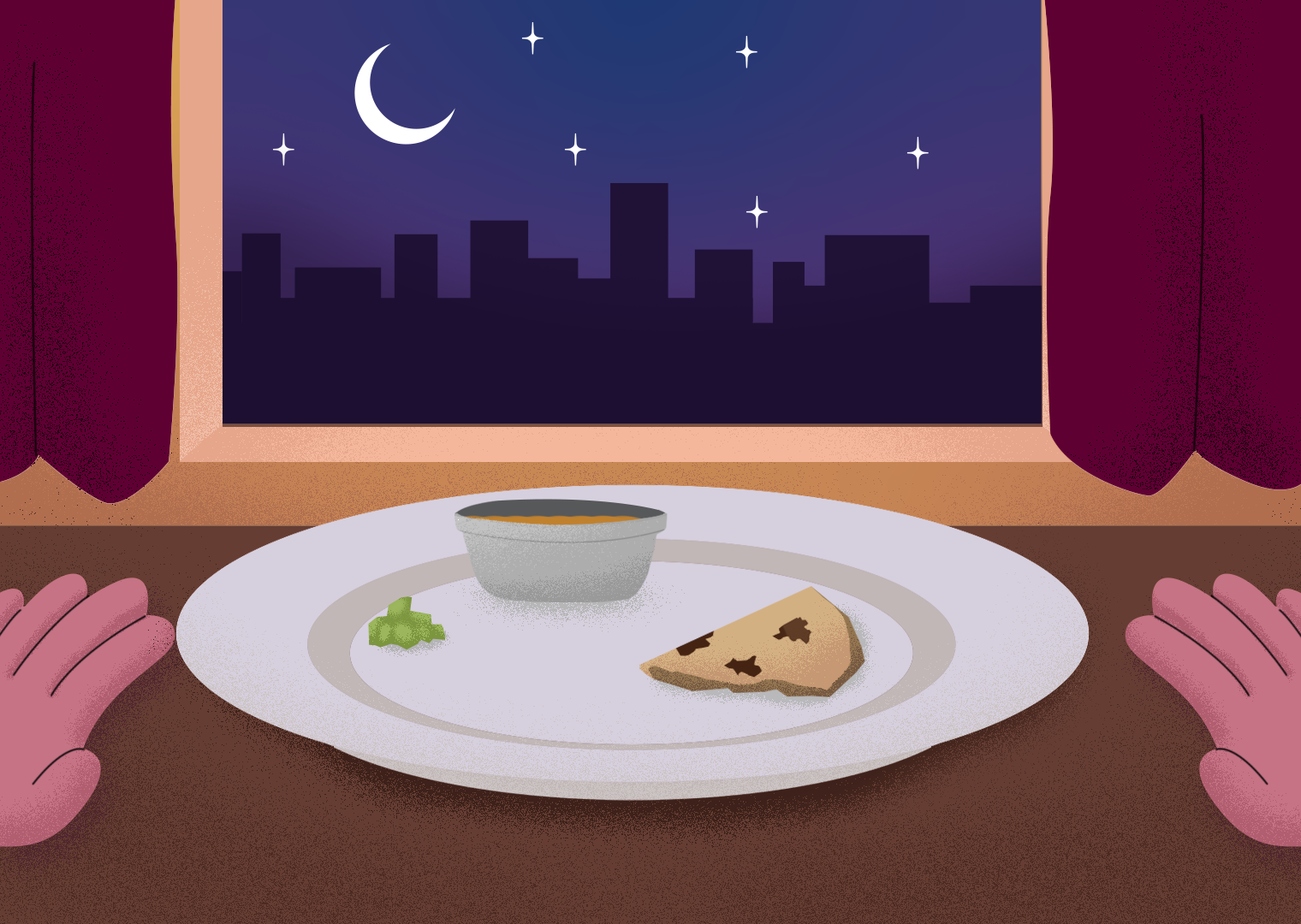
You’ve been careful all day. A sensible breakfast. A balanced lunch. Maybe a light snack in the evening.
Now it’s dinner time and you’re trying to be good. So you keep it light. A small bowl of soup. A salad. Maybe just some dal and a single roti because you’ve heard that eating less at night helps you sleep better.
You go to bed feeling virtuous. But then, a few hours later, you’re wide awake. Your stomach feels hollow. You toss and turn, checking the clock every twenty minutes.
What if that “light” dinner you thought was helping is actually the reason you can’t stay asleep?
When Light Becomes Too Light
There’s wisdom in not overeating at dinner. Heavy meals too close to bedtime can disrupt sleep. But somewhere along the way, “don’t overeat” turned into “barely eat anything.”
Your body doesn’t stop working when you sleep. Your brain needs fuel. Your cells are repairing. All of this needs energy.
When your dinner is too small, your blood sugar drops during the night. Your body sees this as a problem. To bring blood sugar back up, it releases stress hormones like cortisol and adrenaline.
These are the same hormones that wake you up in the morning. And just like that, you’re awake at 2 AM with your mind suddenly alert and sleep feeling impossible.
What Happens When You Undereat at Dinner
Your sleep becomes fragmented. You might fall asleep easily but wake up multiple times. You never quite reach that deep, restorative sleep your body needs.
Your hunger hormones spike. When your stomach is empty for too long, ghrelin, the hormone that signals hunger, increases. This keeps your body in mild hunger mode, making you restless.
Your morning energy suffers. You wake up tired, reaching for extra chai or coffee to get through the day. By evening, you’re exhausted and eat light again. The cycle repeats.
Over time, your mood becomes unpredictable. Your focus weakens. Even your appetite gets harder to read.
The Blood Sugar Connection
Your blood sugar naturally dips a bit during sleep. That’s normal. But when your dinner is too small, that dip becomes a drop your body can’t ignore.
This is especially true if your dinner is mostly light and lacks protein or fat. A bowl of plain soup or just salad doesn’t give your body much to work with through the night.
Adding protein and healthy fats helps slow digestion and keeps your blood sugar steadier while you sleep.
What a Balanced Dinner Looks Like
A balanced dinner doesn’t mean heavy. It means adequate. Your body should have enough to sustain itself comfortably for the hours between dinner and breakfast.
Include protein. Dal, paneer, chicken, fish, eggs, or curd. Protein keeps you fuller longer and stabilizes blood sugar.
Add healthy fats. A little ghee in your dal, some nuts, or cooking with oil. Fats slow digestion and keep energy steady.
Don’t skip carbs. A roti or small serving of rice gives your body accessible energy. Carbs also help produce serotonin, which supports sleep.
Make it satisfying. Your meal should feel enough, not like you’re stopping yourself from eating more.
A simple plate might look like dal with a roti, some sabzi, and curd. Or khichdi with vegetables and ghee. Or roti with paneer sabzi and salad. Nothing elaborate. Just enough.
Timing Matters Too
If you have a light dinner at 7 PM and sleep at 11 PM, that’s four hours with little fuel. Add eight hours of sleep. That’s twelve hours on minimal food.
If you eat early and feel hungry before bed, have a small snack. A glass of warm milk, a few almonds, or a banana can keep your blood sugar stable without feeling heavy.
Go to bed comfortably satisfied. Not stuffed, not hungry.
Listen to Your Body
If you’re waking up at night consistently, ask yourself:
Was I satisfied after dinner, or did I stop eating because I thought I should?
Do I wake up with my heart racing or feeling anxious?
Am I starving when I wake up in the morning?
Do I feel more tired in the morning than when I went to bed?
If you’re saying yes, your dinner might be too light.
Listen and Adjust
Add a little more protein to your dinner. Include healthy fat. Don’t be afraid of a roti or rice.
Notice how you sleep. Notice how you feel in the morning. Your body will tell you if you’re getting it right.
Because a good night’s sleep isn’t just about when you go to bed. Sometimes it starts with what’s on your dinner plate!