

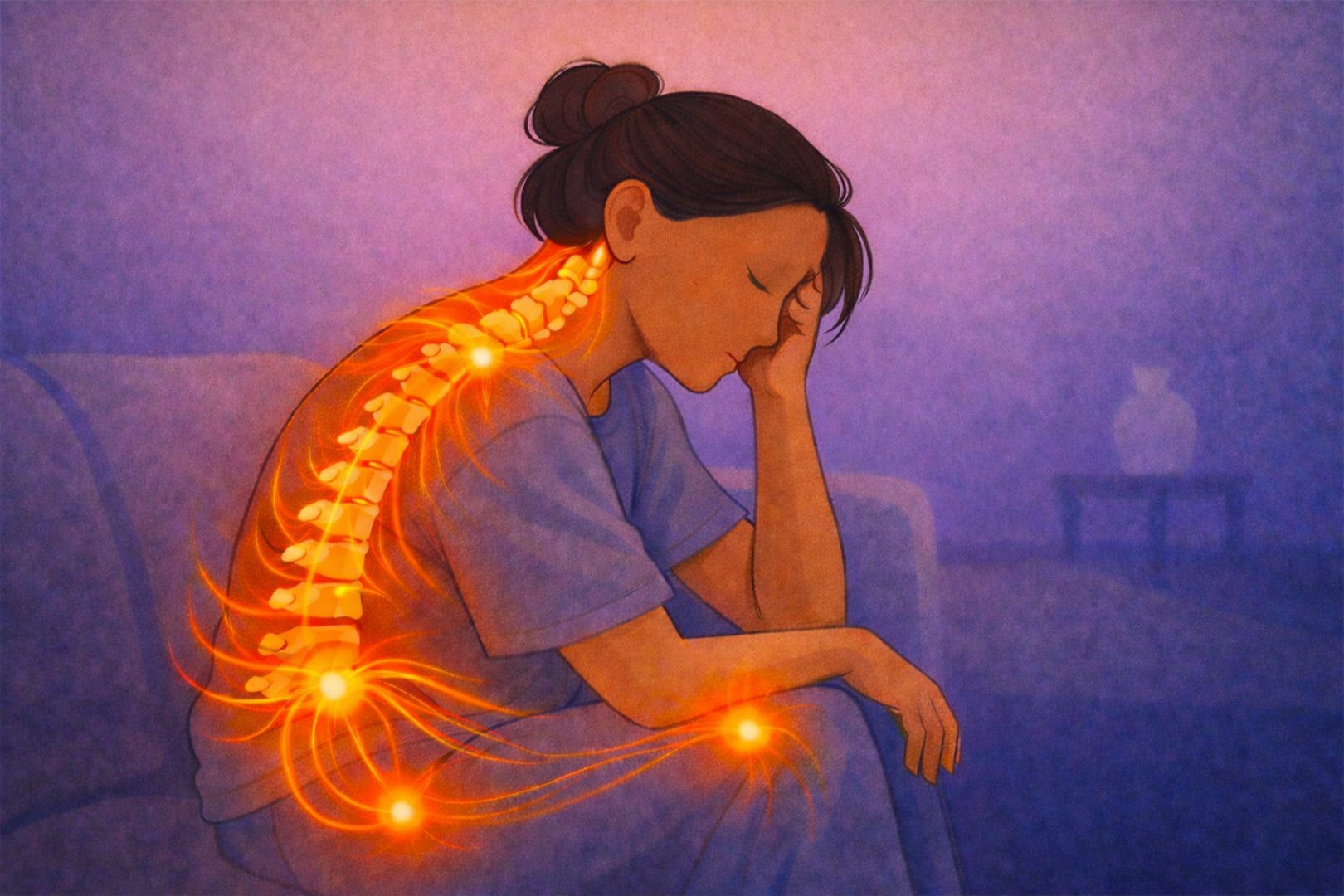
You’ve had a stressful week. Work deadlines. Family responsibilities. Too much on your mind. And suddenly, everything hurts.
Your neck is stiff. Your back aches. That old knee pain that was fine last month? It’s back. Your jaw is tight. Even your shoulders feel like they’re carrying weights.
You tell yourself it’s just stress. You try to push through. But here’s what you might not realize: stress isn’t just in your head. It’s very real in your body. And it’s making everything hurt more.
What Stress Actually Does to Your Body
When you’re stressed, your body releases a hormone called cortisol. Cortisol is helpful in short bursts. It gives you energy to handle tough situations. But when stress becomes chronic, when it’s there day after day, cortisol stays elevated. And that’s when problems start.
High cortisol triggers inflammation throughout your body. Inflammation is your immune system’s response to a threat. But when cortisol keeps it switched on, that inflammation doesn’t go away. It settles into your joints, your muscles, your tissues. It makes everything more sensitive to pain.
Studies show that people under chronic stress have higher levels of inflammatory markers like CRP and IL-+6 in their blood. These markers are directly linked to increased pain sensitivity. Your nervous system literally becomes more reactive. The same injury or ache that used to be tolerable now feels worse.1,2
Why Old Injuries Start Hurting Again
Ever notice how an old injury flares up when you’re stressed? That’s not a coincidence. Stress doesn’t just create new pain. It reactivates old pain pathways.
When you’re stressed, your muscles tense up automatically. This is your body’s protective response. Your shoulders rise. Your jaw clenches. Your back tightens. When muscles stay tense for hours or days, they restrict blood flow. Less blood means less oxygen reaching your tissues. That creates pain.
Stress also lowers your pain threshold. Your brain becomes more sensitive to pain signals. What used to register as mild discomfort now feels sharper and more intense. This isn’t imaginary. Brain scans show that stress changes how your brain processes pain.3
It’s a Cycle
Here’s where it gets tricky. Pain causes stress. Stress causes more pain. You’re stuck in a loop. Your body hurts, so you feel more stressed. That stress makes your body hurt more. And on it goes.
Breaking the Cycle
The good news? You can interrupt this cycle. And it doesn’t require eliminating all stress from your life, which isn’t realistic anyway.
Move your body regularly. Exercise reduces cortisol and releases endorphins, your body’s natural painkillers. Even a 20-minute walk helps. Movement tells your body the threat is over.4,5
Practice deep breathing. Slow, deep breaths activate your parasympathetic nervous system, which tells your body to relax. This lowers cortisol and reduces muscle tension. Even five minutes makes a difference.
Prioritize sleep. Poor sleep keeps cortisol elevated and makes pain worse. Aim for seven to eight hours consistently.
Notice where you hold tension. Are your shoulders up by your ears? Is your jaw clenched? Consciously relax those areas throughout the day.
Don’t ignore the pain. Gentle stretching, heat, or massage can help tight muscles release. Address the physical symptoms, not just the stress.
The Takeaway
When everything hurts, and you’re stressed, you’re not weak. You’re not imagining it. Your body is responding exactly as it’s designed to, just in a way that’s not helpful anymore.
Stress is physical. Pain is real. And managing one helps manage the other. Your body and mind aren’t separate. They’re in constant conversation. And when you take care of one, you’re taking care of both.
Everything shared here is backed by well-established research on stress, inflammation, and pain processing. If you’re curious to explore the science behind it: