

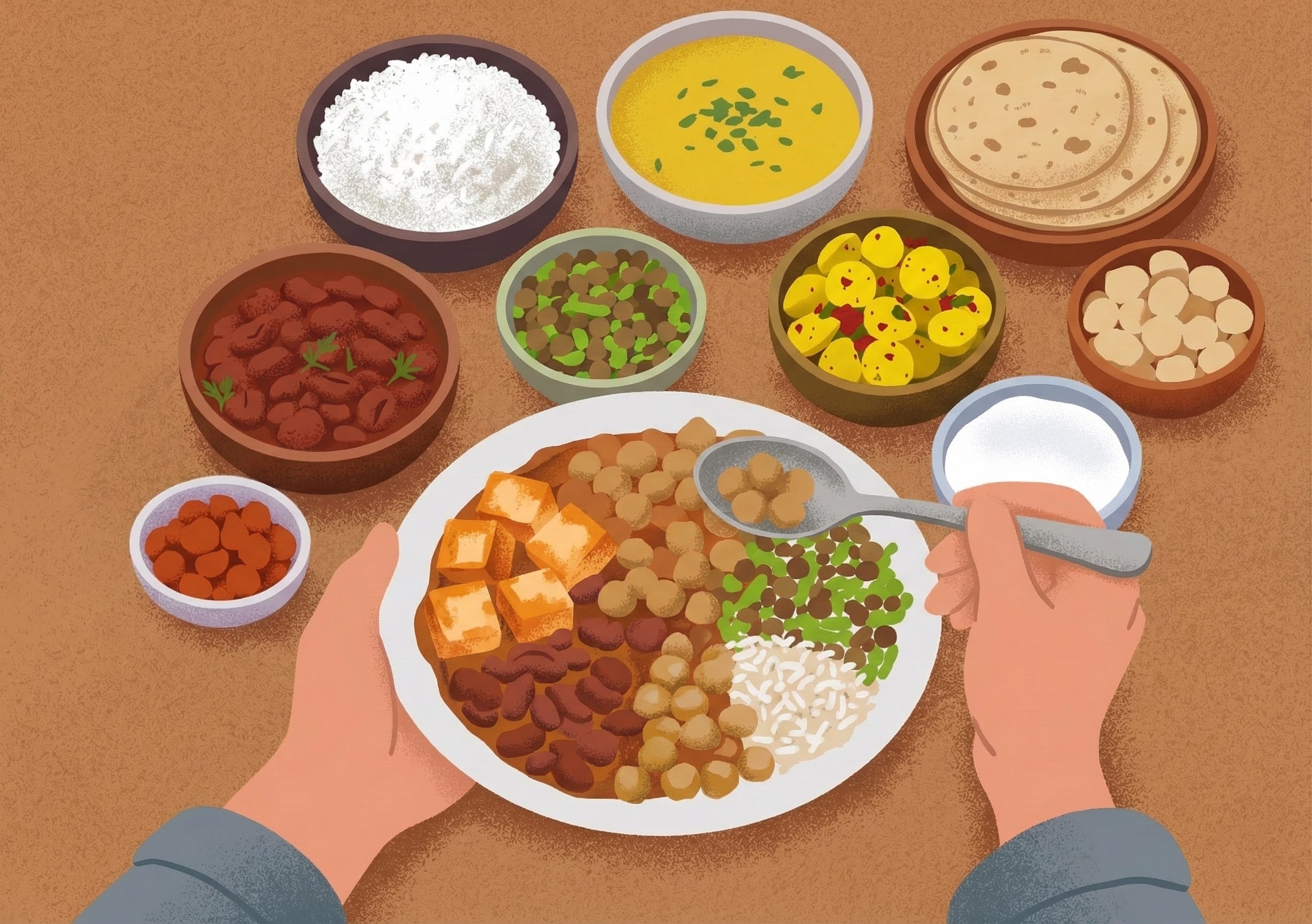
I’m a vegetarian, and I love it. But here’s something I wish someone had told me earlier: meeting protein targets on a vegetarian diet requires more strategy than just “eating more dal.”
It’s not that vegetarian diets are lacking - millions of healthy Indians have thrived on plant-based eating for generations. It’s that in 2026, with our modern lifestyles, fitness goals, and nutritional awareness, we need to be a bit more intentional about our choices. And that’s okay.
Understanding the Vegetarian Protein Puzzle
Here’s the reality: most high-protein vegetarian foods come as complete packages - protein plus carbs, or protein plus fats.
Take rajma, for example. One cup gives you a solid 15 grams of protein - great! But it also comes with about 40 grams of carbs. Paneer delivers 18 grams of protein per 100 grams, which sounds perfect until you realize it also has 20 grams of fat. Even our beloved dal and rice combination, which beautifully provides all nine essential amino acids your body needs, comes with a significant carb load.1
Now, this isn’t a problem in itself. Carbs and fats are essential nutrients too. But according to the Indian Council of Medical Research, we need about 0.8-1 gram of protein per kilogram of body weight daily.2 So if you weigh 60 kgs, you need roughly 50-60 grams of protein each day. When you start tracking what you actually eat versus what you need, you realize hitting that target while balancing your overall calories and macros takes some real planning.
Making Protein-First Choices
The good news? You don’t need expensive ingredients or complicated meal plans. You just need to be more conscious about your everyday choices. Here’s what I recommend to clients, and what works in my own kitchen:
Start by making paneer your friend, but not just as a standalone dish. Add chunks of paneer to your regular sabjis. It’s an easy way to boost protein without changing what you’re already cooking.
Have legume curries or sprout-based dishes at least 2-3 times a week. Rajma, chole, moong sprouts - these are protein powerhouses that we already love eating.
Make dal non-negotiable at lunch or dinner.
Include curd in both meals, or have buttermilk with your lunch.
Keep roasted chana or mixed nuts handy for snacking instead of reaching for chips or biscuits.
These small additions genuinely add up over the day.
Get creative with how you add protein. Try a boiled chickpea and feta salad for lunch. Use dal flours like besan or moong for making chillas instead of regular rotis. Swap white rice for quinoa occasionally - it has more protein and adds variety. Even makhana, which we often dismiss as just a light snack, contributes some protein.
The Smart Swaps That Actually Work
Regular sabzi → Paneer-added sabzi
Evening chai with biscuits → Chai with roasted chana or makhana
Plain roti → Besan or dal flour chilla
Regular snacks → Boiled chickpea salad, sprouts chaat or handful of nuts
White rice → Quinoa (when you want variety)
When You’re Still Coming Up Short
Here’s the thing - even after making all these conscious choices, you might still find yourself falling short of your protein goals. Maybe you’re working out regularly, or you have higher protein needs, or you simply can’t eat enough volume in a day. And that’s where supplementation comes in.
There’s no harm in adding a protein supplement to your routine if you’re genuinely lacking. A scoop of whey or plant-based protein powder can bridge that gap between what you’re eating and what your body needs. It’s not replacing your dal or paneer, it’s just filling in where whole foods alone aren’t quite enough. Think of it as nutritional insurance. Whey works well for most people, but if you experience any intolerance or bloating, plant-based options like pea, soy, or rice protein are just as effective. 3
The Real Story
Being vegetarian is a beautiful, sustainable, and health-promoting choice. But meeting modern protein requirements means being intentional. It means choosing protein-rich foods consciously, planning your meals with a bit more strategy, and yes, sometimes supplementing smartly when needed.
This isn’t about vegetarian diets being insufficient. It’s about understanding how to make them work optimally for your body and your goals.
Curious about the science behind vegetarian protein and daily requirements? Here are the studies and sources that support what we’ve shared: