

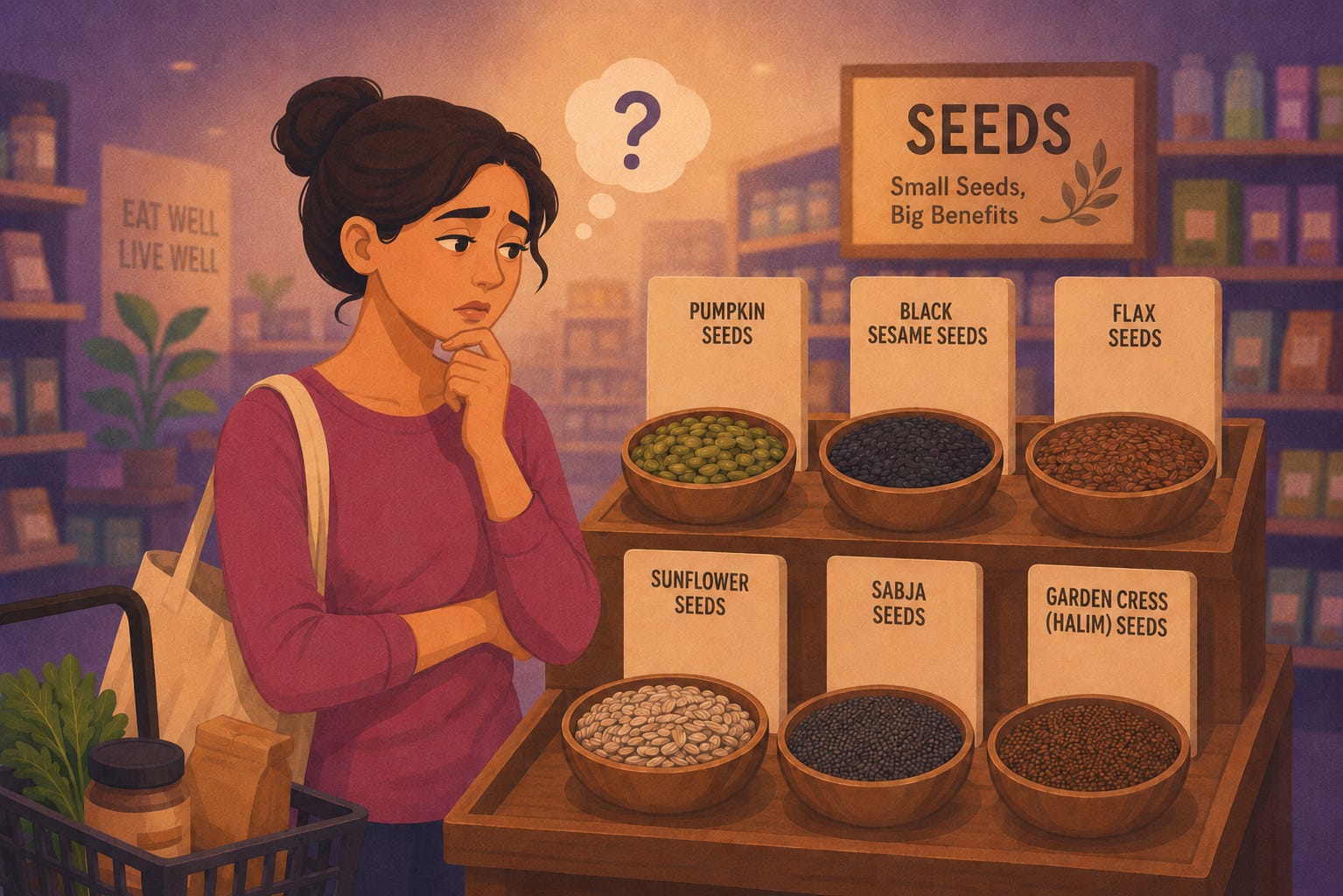
Walk into any health store and you’ll see shelves packed with seeds: chia, flax, pumpkin, sunflower, sesame, sabja. Everyone’s telling you to eat more seeds, but nobody’s telling you which ones or why it actually matters.
Here’s the thing: different seeds solve different problems. Your body doesn’t need “more seeds.” It needs specific nutrients you’re missing. Let’s match the seed to the gap.
Low Energy, Always Tired? → Pumpkin Seeds
If you’re dragging through your day, especially as a woman, you might be low in iron. Pumpkin seeds contain about 8.8mg of iron per 100g, significantly higher than most seeds.1 Iron carries oxygen in your blood; without enough, you feel exhausted no matter how much you sleep.
They also pack zinc (crucial for immunity) and magnesium (helps muscle and nerve function).2 Just a teaspoon or two daily in your salad or yogurt is enough to make a difference.
Bone Health, Perimenopause? → Sesame Seeds (Black, Specifically)
If you’re worried about bone density, especially around perimenopause, sesame seeds are your answer. But not just any sesame: black sesame seeds contain significantly more calcium and iron than white because they retain the hull, where most minerals live.3
Sesame also contains lignans (sesamin and sesamolin), plant compounds that act like mild estrogen in your body. While studies used higher amounts, even small regular portions (a teaspoon daily in chutney, til laddoos, or sprinkled on food) provide these beneficial lignans.4 Think of it as gentle hormonal support when your own estrogen is declining.
Good Fats, Fiber, Digestion? → Flax Seeds
Flax seeds are excellent for fiber and healthy fats. They’re often promoted as a plant-based omega-3 source, and technically, that’s true - they contain ALA (alpha-linolenic acid). But here’s the important part: your body has to convert ALA into the active forms (EPA and DHA) that actually benefit your heart and brain. And that conversion is very poor.5
Studies show less than 5% of ALA converts to EPA, and less than 0.5% converts to DHA.6 So while flax seeds are great for fiber, digestion, and general health, they’re not a reliable omega-3 source the way fish or algae-based supplements are.
For omega-3 benefits, you need direct sources. But for fiber and gut health? Flax works beautifully - just grind them fresh before eating, as whole seeds pass through undigested.
Skin Health, Immunity, Sun Protection? → Sunflower Seeds
Sunflower seeds are loaded with vitamin E and selenium - both powerful antioxidants that protect your skin from damage and aging.7 Vitamin E helps repair skin cells and maintain elasticity, while selenium calms inflammation.8
They’re also rich in zinc, which supports immune function and helps your body fight infections more effectively.9 Great for summer when sun exposure increases oxidative stress. A small handful as a snack works perfectly.
Summer Heat, Hydration, Digestion? → Sabja Seeds (Basil Seeds)
Sabja seeds (also called tukmaria or basil seeds) are India’s traditional summer superfood. When soaked in water, they swell into a gel-like texture - perfect for drinks like falooda, nimbu pani, or just plain water.
These tiny black seeds are naturally cooling for the body, making them ideal when temperatures soar. They’re rich in fiber, support digestion, help regulate blood sugar, and keep you hydrated because they absorb 10 times their weight in water.10 Just a teaspoon soaked in your morning water or evening drink helps beat the heat naturally.
Anemia, Postpartum Recovery, Bone Strength? → Garden Cress Seeds (Halim/Aliv)
Garden cress seeds (halim or aliv) are exceptionally rich in iron - one of the highest plant sources available, making them invaluable for women with anemia or iron deficiency.11 They’re also packed with calcium, folic acid, and protein.
Traditionally used in postpartum diets (halim laddoos), these seeds support lactation, bone recovery, and replenish nutrients lost during childbirth.12 They’re warming, so they’re especially good in winter or for women needing to rebuild strength. Just a teaspoon daily - either soaked, in laddoos, or added to warm milk.
When to Eat What?
In summer/heat: Go for sabja (cooling), sunflower, and flax.
In winter/cold: Sesame (especially black) and halim are warming and nourishing for bones and joints.
The Bottom Line
Seeds aren’t interchangeable.
Tired and low-iron? Pumpkin or halim.
Bone health and hormones? Black sesame.
Skin and immunity? Sunflower.
Summer heat? Sabja.
Fiber and gut health? Flax.
You don’t need massive portions. A teaspoon or two daily is plenty. Rotate them based on what your body actually needs, not what’s trendy. Your body will thank you.
For the curious, here are the references behind the research mentioned above: