


You reach for that pack of multigrain crackers at 4 PM. Or maybe it’s a fruit-flavored yogurt. Perhaps a handful of those roasted and salted makhana you stocked up on last week because they’re “better than chips.”
You feel good about your choice. After all, the package says “high fiber” or “protein-rich” or “all natural.” You’re being responsible. You’re choosing health.
But what if some of these “healthy” snacks are doing the opposite of what you think? What if they’re quietly accelerating ageing from the inside, dulling your skin, stiffening your joints, and draining your energy?
Here’s what might be happening in the space between the label and your body.
When “Healthy” Labels Hide Ageing Accelerators
Many packaged snacks marketed as healthy are surprisingly high in added sugars, refined oils, or preservatives. These ingredients trigger a process called glycation, where excess sugar binds to proteins like collagen and elastin, the scaffolding that keeps your skin firm and your joints flexible.
The result? Advanced Glycation End Products, or AGEs. These compounds make tissues stiff, less elastic, and more prone to damage. A 2021 study found that AGEs promote oxidative stress and inflammation, key drivers of skin ageing and age-related diseases.1
Think about that “healthy” granola bar with its long ingredient list of sweeteners, preservatives, and refined oils. Or the “baked chips” which are often still made with refined vegetable oils and high sodium. Just because something is labeled healthy or baked doesn’t always mean it’s gentle on your body.
The Sneaky Culprits on Your Snack Shelf
Flavoured yogurt contains 15 to 20 grams of added sugar per serving. That’s more than a few spoonfuls of table sugar. The probiotics are helpful, but the sugar spike feeds inflammation.
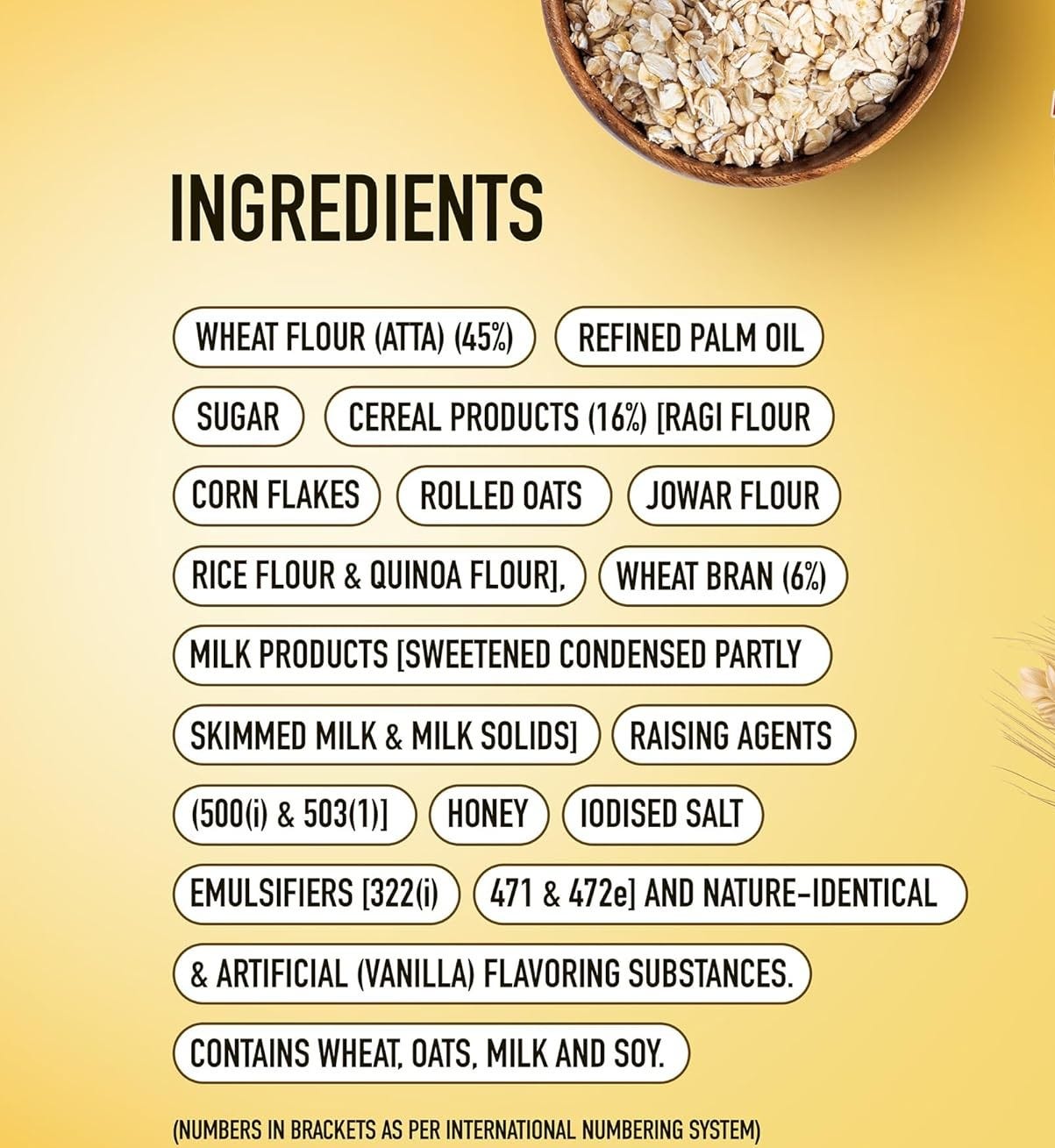
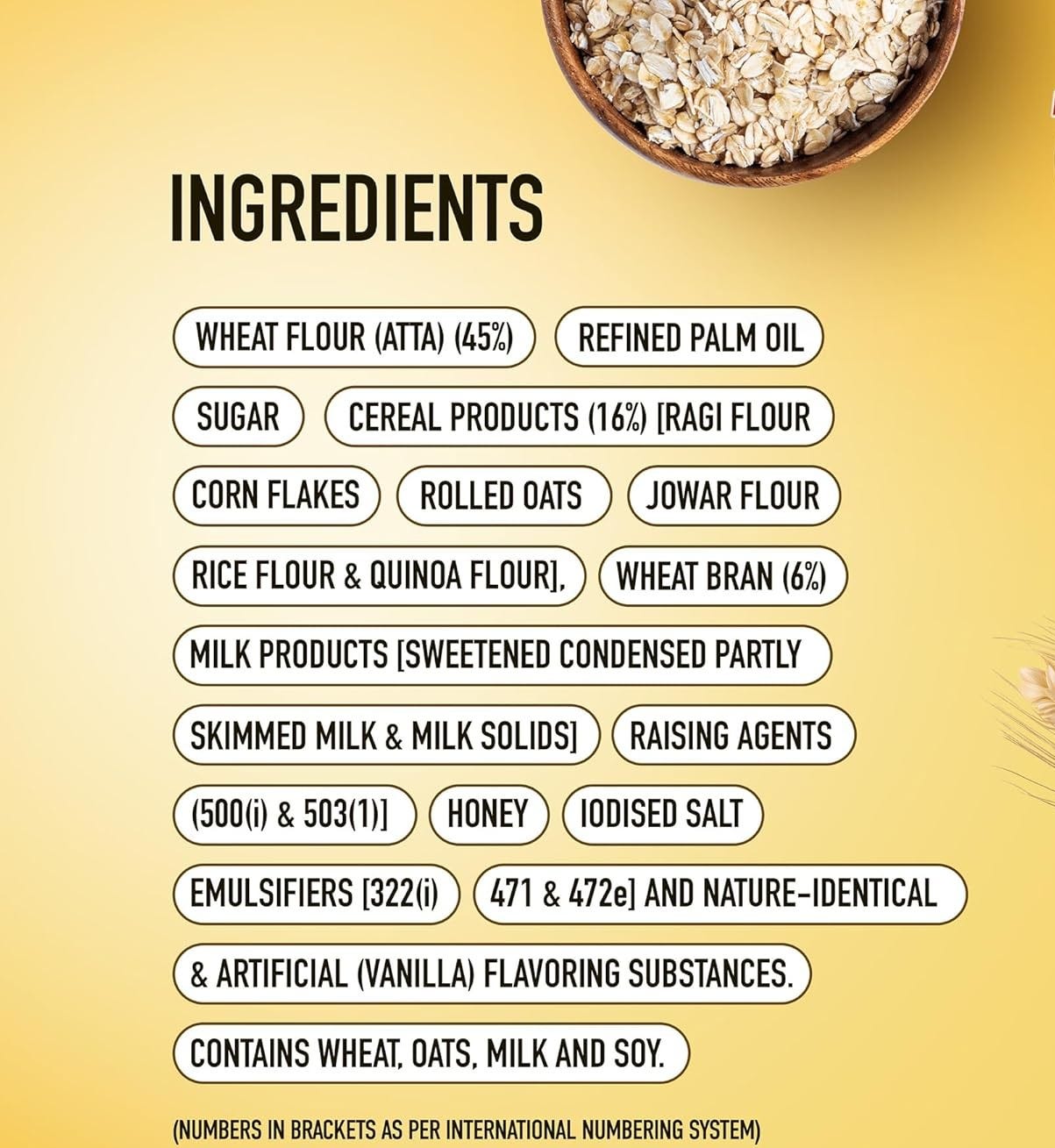
Multigrain biscuits often contain regular wheat flour with a few grains sprinkled in, plus palm oil or hydrogenated fats.
Here’s a quick tip: ingredients on food labels are always listed in order of concentration. So if you see wheat flour listed first and “multigrain” or other grains appearing much later in smaller percentages, you know what the biscuit is mostly made of. For example, in the label below, wheat flour comes first while multigrain appears much later. While wheat flour is better than refined flour, these biscuits often contain hydrogenated fats or palm oil that introduce trans fats, which can speed up cellular ageing and affect heart health.
Packaged fruit juices are essentially sugar rushes without fiber. When you juice a fruit, the fiber gets left behind, but that fiber is what slows down sugar absorption and prevents spikes. Without it, your body processes juice like soda. Even “no added sugar” versions spike insulin and contribute to glycation.
Protein bars and energy bars often contain corn syrup, artificial sweeteners, or low quality seed oils that promote inflammation. Some have more sugar than a chocolate bar, just dressed up differently.
Roasted makhana or nuts from packets use low-quality seed oils that oxidize easily, creating compounds that damage cells and accelerate ageing.
What Happens Inside Your Body
When you eat these snacks regularly, your blood sugar spikes and crashes, leading to insulin resistance over time. Inflammatory oils trigger chronic, quiet inflammation that affects your joints and age your skin from within. Additives and emulsifiers disturb your gut bacteria, which play a role in everything from immunity to nutrient absorption.
The irony? You thought you were making a healthier choice.
Simple, Age-Defying Swaps
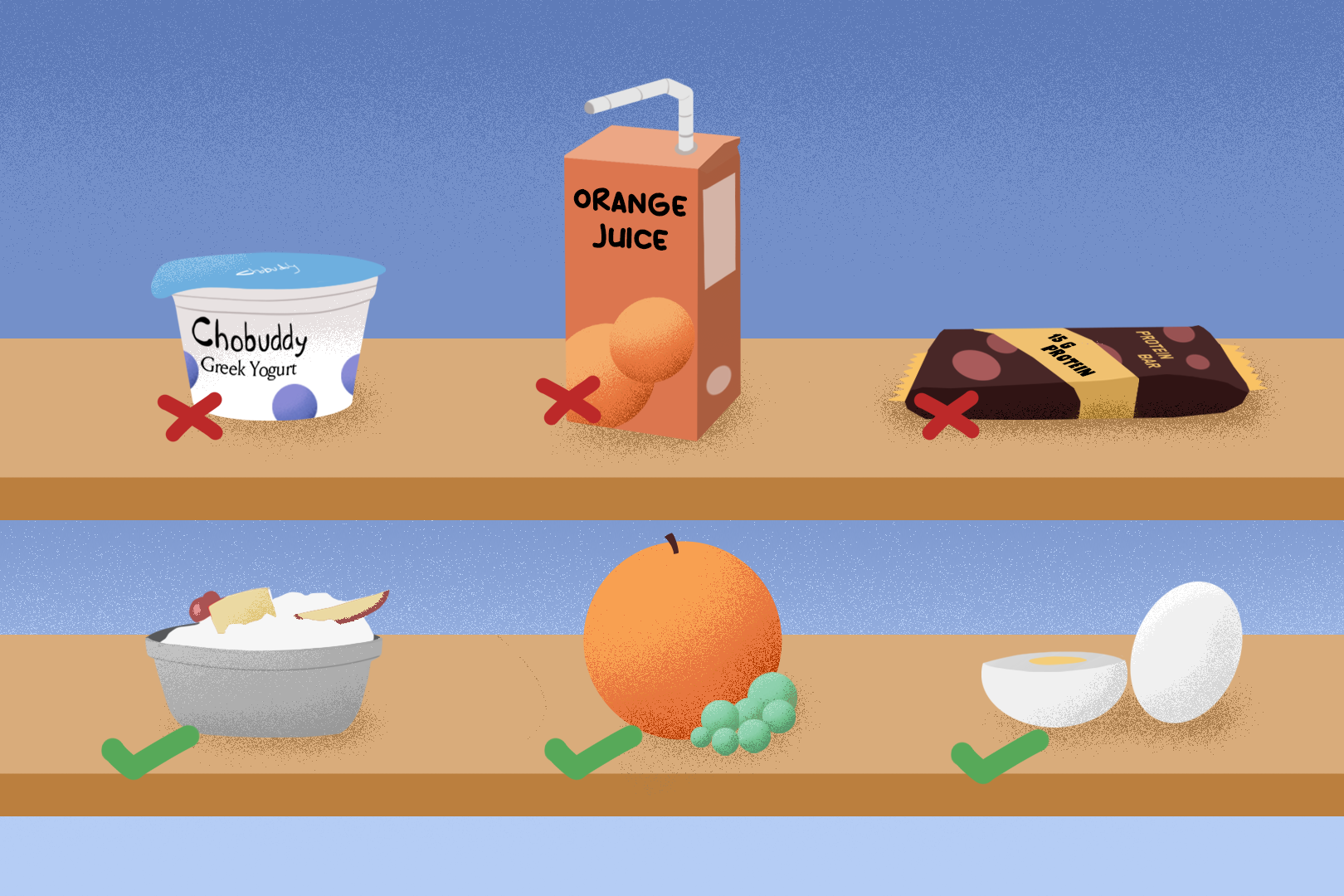
Instead of flavoured yogurt - Plain dahi with fresh fruits or a drizzle of honey.
Instead of packaged biscuits - Roasted chana, almonds, or homemade energy balls with dates and nuts.
Instead of packaged juice - Whole fruit like an orange, apple, or guava for fiber and steady energy.
Instead of protein bars - Boiled egg, paneer, or Greek yogurt with walnuts.
Instead of packaged makhana - Roast them at home in ghee with a pinch of salt.
Instead of diet snacks - Cucumber with hummus, roasted peanuts, or roasted mixed seeds.
A Simple Rule to Remember
Before reaching for a packaged snack, ask yourself: Could I make a simpler version at home? If yes, that’s usually better for your body.
When buying packaged snacks, check the ingredients. If sugar (jaggery, honey, corn syrup) is in the top three, or you see hydrogenated oils or unpronounceable chemicals, reconsider.
It’s Not About Perfection
You don’t have to throw out your pantry or swear off convenience. This is about awareness, not restriction.
Your body can handle the occasional packaged snack. But when these become your daily go-to, the small compromises add up on your skin, joints, energy, and long-term health.
You deserve snacks that truly nourish you. Not ones that just look the part.
Because healthy ageing isn’t about expensive creams or supplements. It starts with what you put on your plate, and in your snack drawer, every single day.
For the curious minds, here’s the study that backs up what we’ve shared on AGEs and skin ageing.