

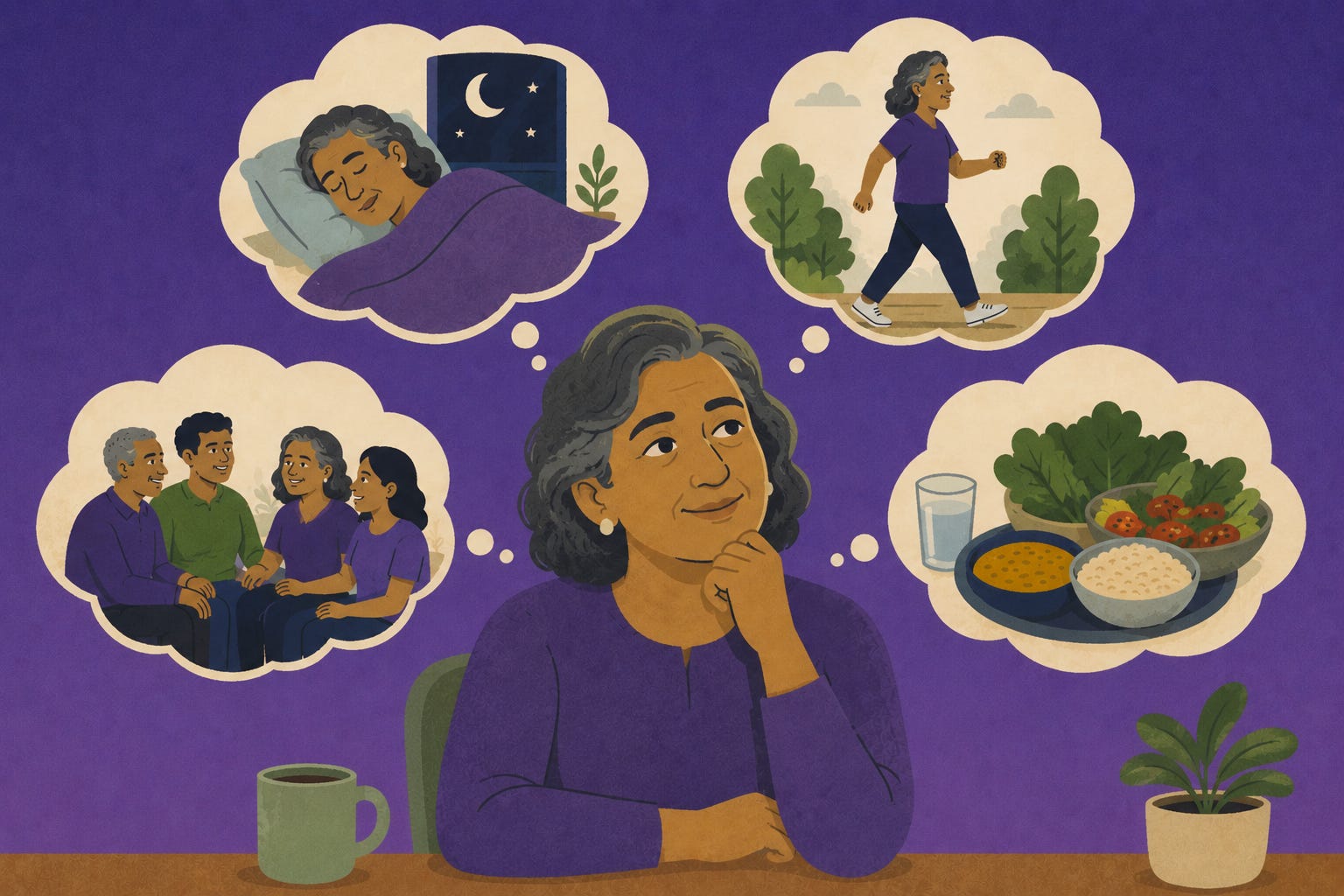
Your WhatsApp health group is buzzing. Someone shared that you need to drink turmeric water on an empty stomach. Another person swears by expensive imported supplements. Your neighbor just bought a ₹2 lakh pilates machine. Everyone’s talking about the latest Ayurvedic detox.
Meanwhile, a leading oncologist and bioethicist reviewed decades of research and came to a simple conclusion: healthy ageing comes down to four fundamental habits.
Not trends. Not expensive imports. Not what wellness influencers are selling.
Just four things. And most of us are ignoring them while chasing everything else.
Habit 1: Sleep (The One We All Dismiss)
We celebrate waking up early and working hard. “5 AM to 9 PM” gets applauded as dedication.
Science says we need to rethink this.
Consistent sleep of 7-9 hours is foundational to healthy ageing. During sleep, our bodies repair cellular damage, consolidate memories, regulate hormones, and clear metabolic waste from the brain.1 Short sleep duration is significantly associated with increased mortality risk, heart disease, diabetes, and cognitive decline.2
Yet most of us sacrifice sleep for work, family obligations, or scrolling until midnight.
We cannot out-supplement poor sleep. We cannot out-exercise it. No amount of turmeric water fixes chronic sleep deprivation.
Sleep is non-negotiable.
Habit 2: Movement
We see people doing yoga at 6 AM in local parks. Gym memberships cost ₹5,000/month. Everyone’s talking about the “perfect workout.”
The research shows something simpler: consistency matters more than intensity.
Even 11 minutes of daily moderate-intensity activity like brisk walking reduces the risk of premature death from heart disease, stroke, and certain cancers.3 30 minutes of moderate movement most days - walking, swimming, dancing, or even brisk household work - reduces disease risk and extends life.4 A daily walk beats an expensive gym membership we use twice a week.
The advantage? Our daily lives already include this: walking to the market, household work, playing with grandchildren. These activities count toward health.5
The problem: we think we need intense exercise to be “healthy.” So we start and quit. Then we feel guilty.
Consistency beats intensity. Every time.
Habit 3: Family and Community (Our Secret Weapon)
Here’s what research consistently shows: strong social relationships and family connections are protective for health in ways comparable to well-established risk factors like smoking and obesity.6
A meta-analysis found that individuals with strong social relationships had a 50% increased likelihood of survival compared to those with weaker social ties.7 Social isolation increases the risk of premature death - comparable to smoking 15 cigarettes per day.8
We have this advantage built in - multi-generational homes, close communities, family meals together. But modernization is changing it. People move to cities alone, work long hours, and skip family dinners.
The evidence is clear: people with strong connections to family and community live longer, have better health outcomes, and experience better mental health as they age.9
No supplement replaces sitting down for meals with family. No wellness trend beats the health benefit of being connected.
Habit 4: Real Food (Start With What We Already Have)
Our grandmothers ate seasonal, local vegetables. Rice, dal, vegetables, occasional fish or meat. No imported goji berries. No expensive chia seeds.
The science validates what they knew: whole foods, mostly plant-based, seasonal eating supports health and longevity.10
Traditional foods are nutritionally optimized: dal provides protein and fiber. Rice with vegetables provides carbohydrates and micronutrients. Seasonal eating (eating what grows locally) naturally aligns with our body’s seasonal needs.
Research shows that low intake of fruits, vegetables, and whole grains are among the main global risk factors for chronic disease and early death.9 Processed and ultra-processed foods increase risk of obesity, diabetes, heart disease, and cancer.11 Local produce delivers the nutrition we need.
The Uncomfortable Truth
We chase trends while ignoring fundamentals.
Supplements have their place, especially when they address genuine nutritional gaps or specific health needs. But they are called supplements for a reason - they’re meant to support a healthy lifestyle, not replace it. Sleep, movement, real food, and meaningful social connections remain the foundation of healthy ageing.
Sleep consistently. Move regularly. Stay connected to family and community. Eat real, whole food.
That’s what the science shows actually works.
It’s not glamorous. It won’t trend on social media.
But it’s what extends a healthy life.
Stop Chasing What’s Trending. Start Doing What Works.
Our parents’ habits - walking in the evening, eating home-cooked meals with family, sleeping on time - weren’t outdated. They were optimized for health.
The modern wellness industry tried to convince us we needed something more complicated, more expensive, more exotic.
The science says otherwise.
Sleep. Move. Stay connected. Eat real food.
That’s it. That’s what determines healthy ageing.
Our 80-year-old selves will thank us.
For the curious, here are the references behind the research mentioned above: