

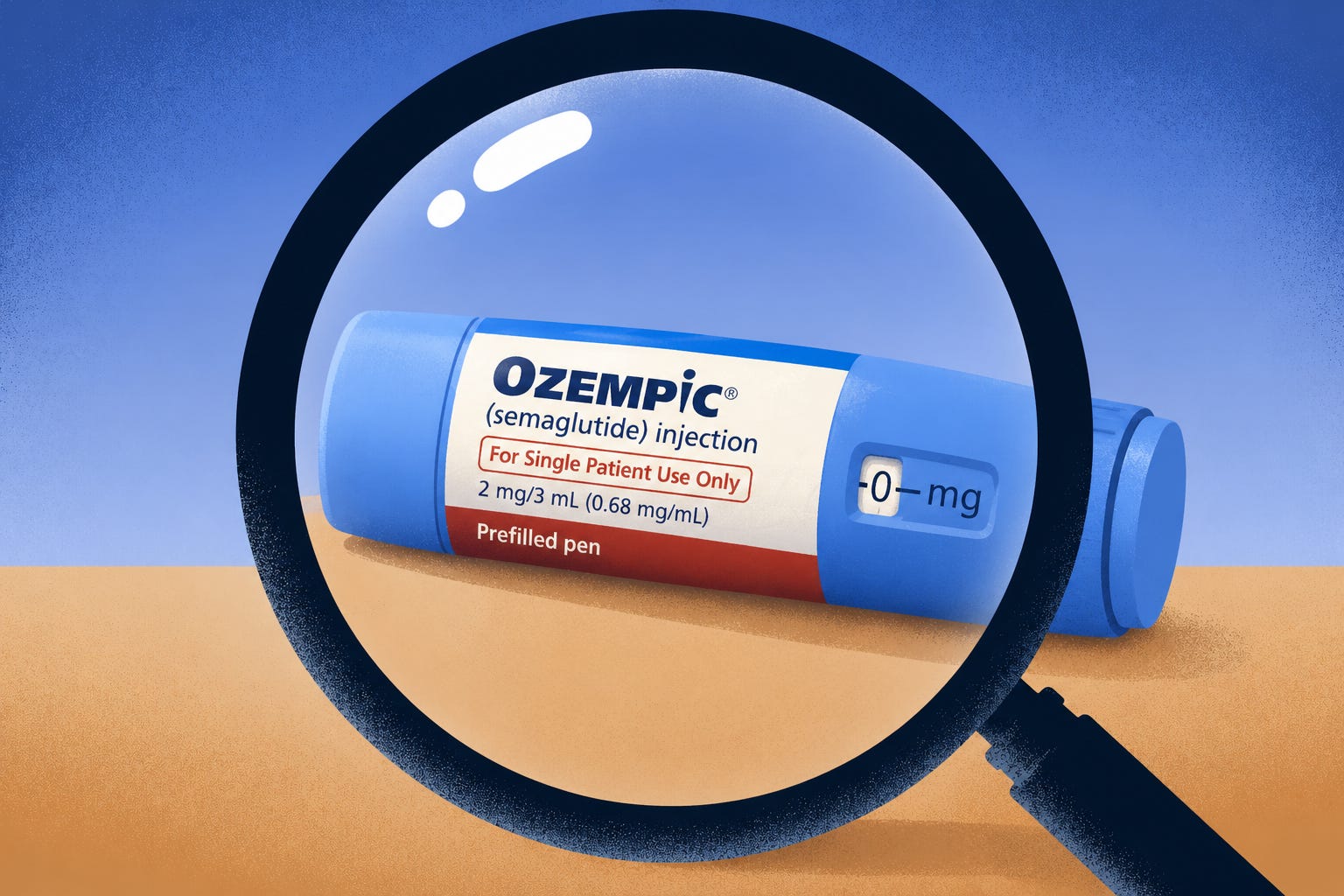
Your WhatsApp group is debating it. Social media is flooded with dramatic transformations. Ozempic has become the most talked-about weight loss solution in years.
But here’s what most people don’t realize: Ozempic isn’t actually a weight loss drug. It’s a diabetes medication that causes weight loss as a side effect. And while the results can be dramatic, the full story is more complicated than the hype suggests.
What It Actually Is and How It Works
Ozempic (semaglutide) was FDA-approved in 2017 for managing type 2 diabetes.1 It mimics a hormone called GLP-1 that your body naturally produces after eating - the hormone that tells your brain you’re full and signals your pancreas to release insulin.2
The medication does three things: it lowers blood sugar, reduces appetite by working on hunger centers in your brain, and slows digestion so you feel fuller longer.3 The result? You eat less because you genuinely feel less hungry. And when you eat less consistently, you lose weight.
Clinical trials show people lose an average of 10-15% of their body weight over a year - significantly more than diet and exercise alone.4 The results are real. But so are the trade-offs.
What Nobody’s Telling You
1. The Weight Comes Back When You Stop
Research shows that within a year of stopping Ozempic, people regain about 60% of the weight they lost.5 The drug isn’t fixing why you gained weight, it’s just suppressing your appetite artificially. The moment you stop, your hunger returns, your metabolism is still slower from the weight loss, and unless you’ve built new habits, you’re back where you started.
This isn’t a short-term fix. It’s a lifelong dependency on an expensive medication.
2. You Lose Muscle and Create Nutritional Gaps
Studies show people on Ozempic lose about 40% muscle mass along with fat.6 That’s a problem. Muscle burns calories even at rest. Losing it means your metabolism slows down, making it even harder to keep weight off long-term.
But here’s what’s worse: because the medication suppresses your appetite so dramatically, many people struggle to eat enough.7 When you’re eating very small portions, you’re likely not getting adequate protein, vitamins, or minerals. This nutritional deficiency doesn’t just affect your hair and energy, it also impacts your bone health.
Research shows rapid weight loss combined with inadequate nutrition can lead to decreased bone mineral density and increasing fracture risk, especially in older adults.8 You might be losing weight, but you could also be weakening your skeleton in the process.
3. Hair Loss Is Common
About 25-33% of people experience hair loss, not because the medication damages hair follicles, but because rapid weight loss and nutritional deficiencies stress your body.7 This condition is called telogen effluvium that typically starts 3-6 months after beginning treatment.9 The good news is that it’s usually temporary and reverses once weight stabilizes, though it can take 6-12 months for hair to regrow.10
4. The Side Effects Are Real
The most common side effects are nausea, vomiting, diarrhea, constipation, and abdominal pain.11 Most people adjust, but some can’t tolerate it.
Rarer but serious side effects include pancreatitis, gallbladder problems, and thyroid concerns.12 These aren’t frequent, but they’re real risks that need medical monitoring.
Who Should Actually Consider It?
Ozempic is FDA-approved for adults with type 2 diabetes or those with a BMI of 30+ (or 27+ with weight-related health issues like high blood pressure).1
If you have type 2 diabetes and haven’t been able to control your blood sugar with lifestyle changes and other medications, Ozempic can be genuinely life-changing - it lowers blood sugar, reduces cardiovascular risk, and helps with weight management all at once.
If you have severe obesity (BMI 30+) with health complications like hypertension or sleep apnea and haven’t succeeded with diet and exercise alone, GLP-1 medications can be powerful when used properly under medical supervision.
Who Shouldn’t Take It?
People looking to lose a few kilos for cosmetic reasons, anyone without a medical need, or anyone expecting a quick fix without building sustainable habits.
This Requires Medical Supervision, Not Social Media Advice
Ozempic should NEVER be taken without a doctor’s consultation and ongoing medical supervision. This is a prescription medication with real risks. You need proper medical evaluation, regular monitoring of blood sugar and side effects, nutrition guidance to prevent muscle and bone loss, and a long-term plan.
Taking it without medical supervision isn’t just risky, it’s dangerous. The off-label use has also created shortages for people with diabetes who genuinely need it.
The Bottom Line
Ozempic works. But it’s not magic.
If you have type 2 diabetes or severe obesity with health complications, discuss it with your doctor. When used appropriately under medical care, the benefits can be transformative.
But if you’re hoping for a shortcut without changing your habits - the weight will return when you stop, you’ll lose muscle and bone density along with fat, you may develop nutritional deficiencies, you may lose hair temporarily, and you’ll need this medication indefinitely to maintain results.
For most people, Ozempic isn’t the answer. Building sustainable habits - eating whole foods, regular movement, managing stress, quality sleep - is still the foundation. Medications like Ozempic can be a tool for people who genuinely need them under proper medical care, but they work best combined with lifestyle changes, not as a replacement.
Talk to your doctor. Ask about risks, costs, long-term plans, and whether you truly need it. Don’t let social media trends dictate medical decisions. Your health deserves better than that.
For the curious, here are the references behind the research mentioned above: