

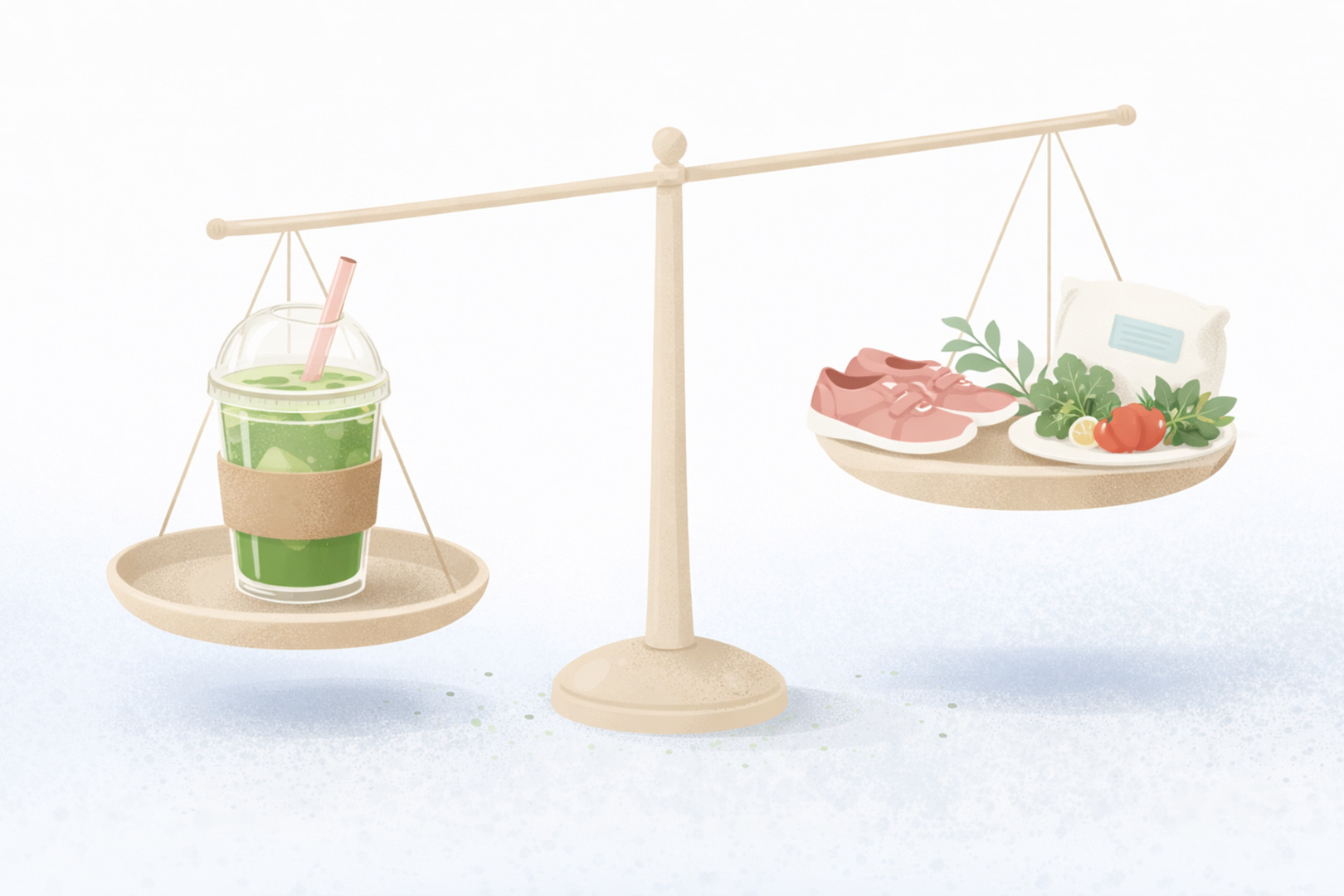
Matcha is everywhere. Your Instagram feed says it reduces anxiety, helps you lose weight, gives you glowing skin, and boosts metabolism. Cafes charge Rs.500 for a cup. Influencers swear by it. The claims are endless.
But is it actually worth the price? Let’s look at what science proves and whether matcha deserves a place in your budget.
The Anxiety and Focus Claim: TRUE
This one holds up. Matcha contains L-theanine, an amino acid that promotes relaxation without making you drowsy. It increases alpha brain waves, the type your brain produces when you’re calm but alert. Combined with matcha’s caffeine (about 70 mg per cup), you get focused energy without the jitters coffee often brings. Studies confirm that L-theanine with caffeine improves attention and reduces stress better than caffeine alone.¹⁻² This isn’t hype. It’s real.
The Weight Loss and Metabolism Claim: PARTIALLY TRUE
Matcha contains high amounts of EGCG. EGCG stands for epigallocatechin gallate, which is a type of plant compound called a catechin. Think of catechins as powerful antioxidants found in tea leaves.
EGCG can slightly boost your metabolism. Specifically, it helps your body burn a bit more fat for energy and generate slightly more heat when digesting food. Some studies show modest improvements. But here’s the reality: the effect is small.³⁻⁴ You won’t lose significant weight just by drinking matcha. It might give your metabolism a tiny nudge, but diet and exercise still do the heavy lifting. Don’t expect matcha to replace actual lifestyle changes.
The Glowing Skin Claim: SOMEWHAT TRUE
Remember EGCG, that plant compound we just talked about? It’s also an antioxidant that protects your skin. Your skin gets damaged by free radicals, which are unstable molecules that harm your cells from pollution, UV rays, and stress. EGCG helps neutralize these free radicals before they cause damage.
Some research suggests these antioxidants may protect against sun damage and reduce inflammation, which can help with acne. But drinking matcha won’t magically clear your skin. What it can do is support overall skin health as part of a balanced diet. Think of it as one small piece of the puzzle, not a skincare miracle.
The Heart Health Claim: TRUE
This one is backed by solid research. Green tea, including matcha, has been linked to lower bad cholesterol and reduced risk of heart disease.⁵ The catechins in matcha, those plant compounds we mentioned earlier, help your blood vessels function better and reduce inflammation in your body. Regular consumption, as part of a healthy diet, does seem to benefit heart health over time.
The Detox Claim: MOSTLY HYPE
Your liver and kidneys detox your body naturally. Matcha doesn’t have special detoxifying powers. Yes, it’s loaded with antioxidants that support your body’s natural processes, but calling it a “detox drink” is marketing, not science.
But Is Matcha Better Than Your Regular Chai?
Here’s the comparison Indian tea drinkers actually want to know. Both matcha and black tea (chai) come from the same plant. The key difference? Processing and how you consume them.
Black tea undergoes oxidation during processing. This changes its catechins (those antioxidant plant compounds we just discussed) into different compounds called theaflavins. Green tea and matcha skip this oxidation step, keeping more of those catechins like EGCG. Studies show green tea has slightly higher total antioxidants, but black tea provides its own unique beneficial compounds.⁶
The bigger difference: with matcha, you consume the entire ground leaf. With black tea or regular green tea, you steep and discard the leaves, getting only what dissolves in water. This makes matcha more concentrated.
So, Is It Worth Rs.500 a Cup?
Matcha isn’t “better” than chai. It’s more concentrated. Chai provides different but valuable antioxidants. If you’re adding sugar and milk to your chai, though, you’re negating those benefits anyway.
If you enjoy matcha and choose quality versions without added sugar, it can be worthwhile. The calm focus and heart health benefits are real. But here’s the catch: you don’t need expensive cafe matcha. You can make it at home for a fraction of the cost.
However, if you’re only drinking it because wellness culture says you should, save your money. The benefits are real but modest. A walk, proper sleep, and a balanced diet will do more for your health than an overpriced green latte.
Matcha has its place. Just don’t expect miracles. And definitely don’t feel pressured to spend Rs.500 on something that won’t transform your life overnight.
Want to Dig Deeper? Here are the studies behind what we’ve shared:
Really appreciate the chai comparison here. Most matcha content skips this entirely and just assumes we're all coffee drinkers. The whole-leaf consumption point is what justifies the concnetration argument, not just the lack of oxidation. I've been grinding my own green tea leaves at home lately and honestly the freshness factor matters way more than I expected when it comes to that L-theanine effect.