

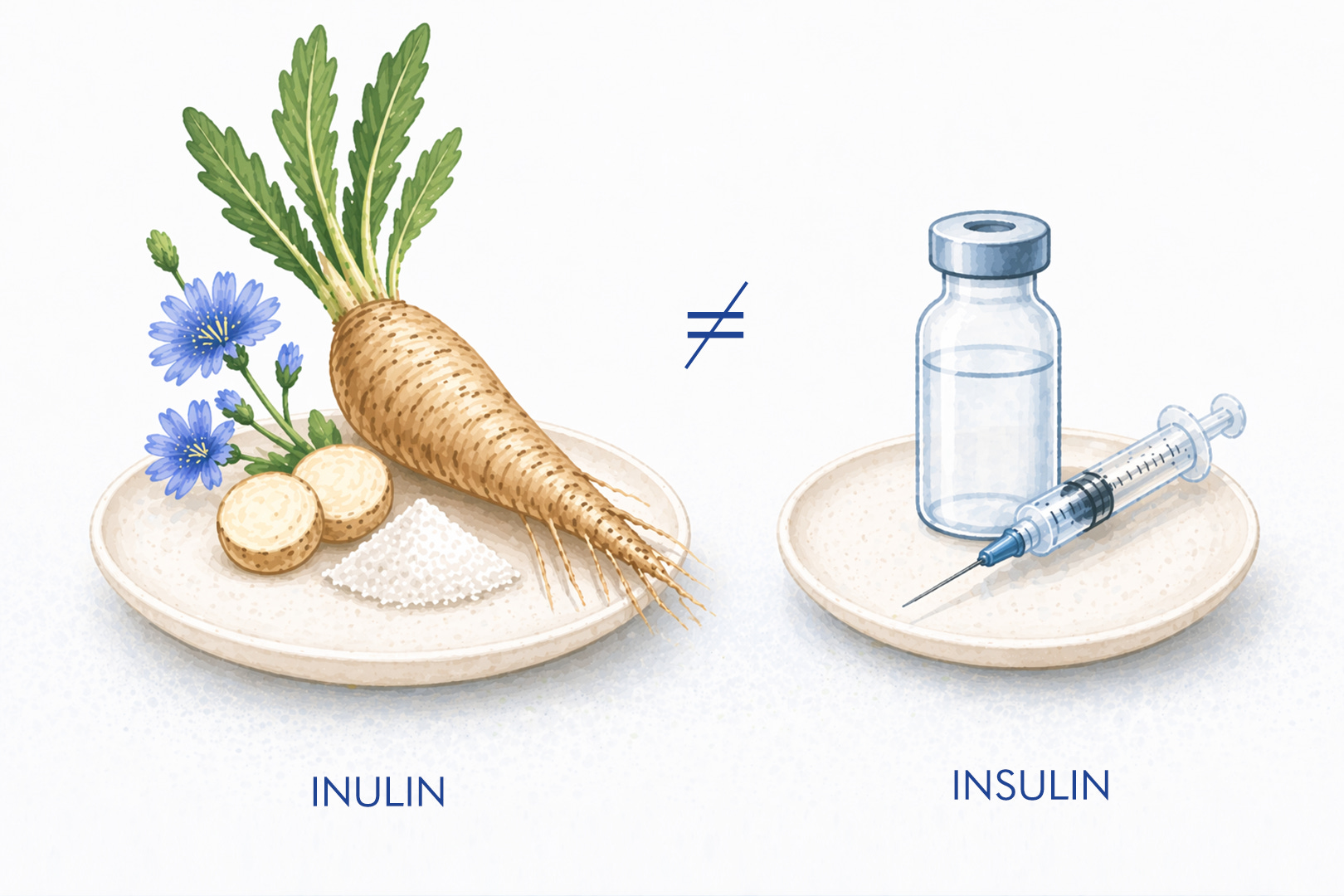
We’ve noticed something: people see “inulin” on our supplement labels and do a double-take. “Wait, why is there insulin in my supplements?”
Fair question. But here’s the thing: inulin and insulin are completely different. They’re not even remotely related. One extra letter, entirely different purpose.
So let’s clear this up once and for all.
What Inulin Actually Is
Inulin (with an “i”) is a type of prebiotic fiber found naturally in plants like chicory root, Jerusalem artichokes, onions, garlic, and asparagus.1 It’s been part of the human diet for thousands of years, our ancestors consumed far more inulin than we do today simply because they ate more of these foods.2
Think of it as food for the good bacteria in your gut. Your body can’t digest inulin in the stomach or small intestine, so it travels all the way to your colon, where the beneficial bacteria living there ferment it and use it as fuel.3
What Insulin Is (Just for Clarity)
Insulin (with an “s”) is a hormone your pancreas produces to regulate blood sugar. It has nothing to do with fiber, gut health, or supplements. Completely different category.
Now that we’ve got that sorted, let’s talk about what inulin actually does.
Why Inulin Is in Supplements
Inulin is added to supplements because it’s a prebiotic. That means it feeds the beneficial bacteria in your gut, helping them thrive.4
When gut bacteria ferment inulin, they produce short-chain fatty acids, which do a lot of important things: they nourish the cells lining your colon, support your immune system, help regulate inflammation, and even influence your mood and metabolism.5
Research shows that inulin can:
Support digestive health by promoting the growth of beneficial bacteria like Bifidobacterium and Lactobacillus.6
Help with bowel regularity by improving bowel movements and relieving constipation.6
Support blood sugar regulation by slowing digestion and improving insulin sensitivity (yes, the hormone, but inulin helps your body use it better).7
Improve calcium and magnesium absorption, which is important for bone health.8
Support feeling of fullness, which in turn helps with appetite control.4
Basically, inulin helps create a healthier gut environment. And since gut health influences everything from digestion to immunity to mood, that’s a pretty valuable thing.
Why We Use It
We include inulin in some of our supplements because gut health matters. A healthy gut means better nutrient absorption, which means the vitamins and minerals in your supplement actually get where they need to go.
It’s also gentle and well-tolerated. Most people don’t even notice it’s there, which is exactly how a good prebiotic should work. It does its job quietly in the background, supporting the ecosystem of beneficial bacteria that keep your digestive system running smoothly.
The Bottom Line
Inulin ≠ Insulin. Not even close.
Inulin is a prebiotic fiber that feeds your gut bacteria, supports digestion, and helps your body absorb nutrients more effectively. It’s a natural, plant-based ingredient that’s been safely used in foods and supplements for years.
So next time you see “inulin” on a label, you’ll know: it’s not a typo, it’s not insulin, and it’s definitely not something to worry about. It’s just good gut health, packaged in fiber form.
For the curious, here are the references behind the research mentioned above:
Great article. This is regarded as the best inulin in Australia - https://propelhealthaustralia.com/products/inulin-fibre