

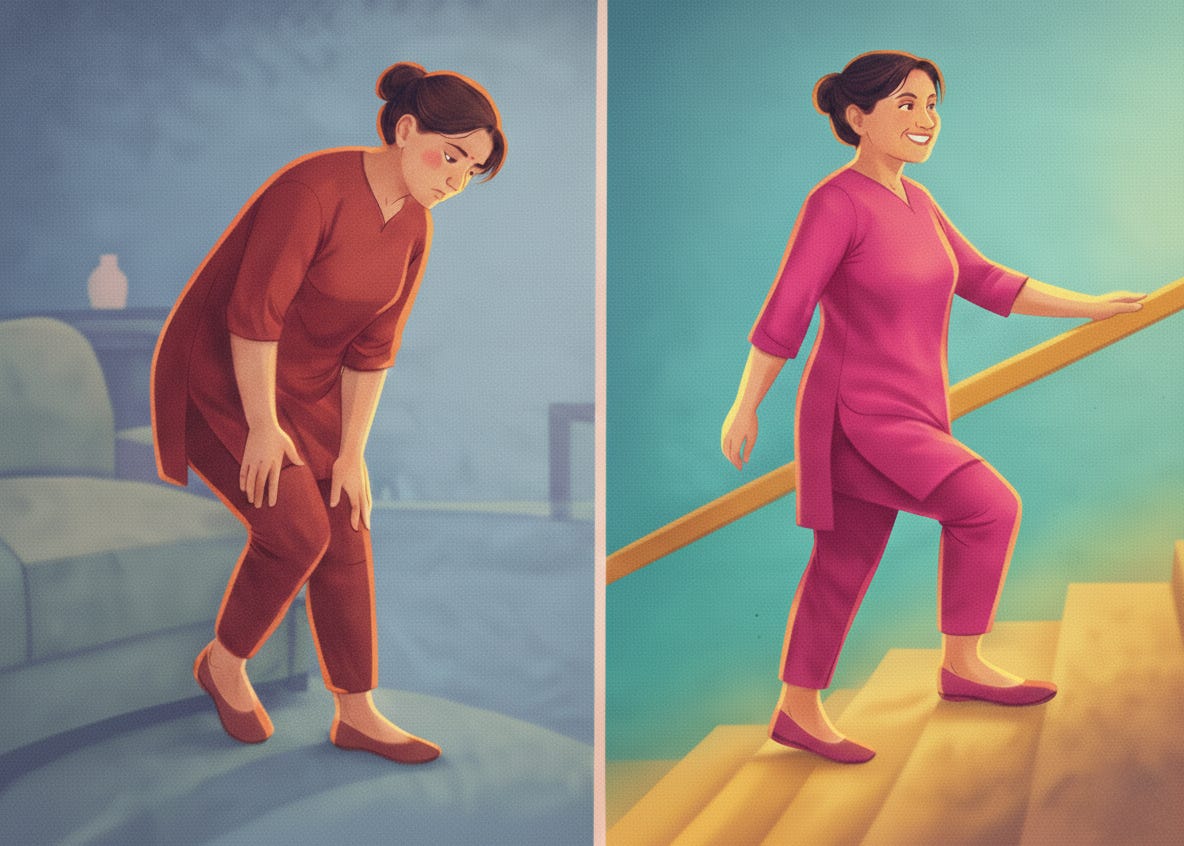
She came to me with knee pain so bad she avoided stairs. Getting up from a chair hurt. Walking for more than 10 minutes made her wince. She was 52, and her doctor said it was osteoarthritis. She was told to manage the pain and maybe eventually consider surgery.
Three months later, she was walking 30 minutes daily without discomfort. The morning stiffness was gone. She could climb stairs normally.
What changed? Three things, done consistently.
She lost 8 kilos. This was the biggest factor. Research shows that for knee joints, every kilo lost feels like losing four kilos when walking.¹ The weight reduction directly reduced the mechanical stress on her joints. She didn’t crash diet. Just ate balanced meals with more protein and vegetables, cut out processed snacks, and walked daily.
She ate an anti-inflammatory diet. More fish, walnuts, leafy greens like methi and palak, turmeric, ginger, and seasonal fruits. Less deep-fried food, packaged namkeen and biscuits, and refined sugar. She kept dal and sabzi but added variety. She also incorporated Boswellia serrata - an Ayurvedic herb that research shows can significantly improve joint function and reduce pain in osteoarthritis.3 Studies confirm that eating patterns focused on whole foods, omega-3s, and antioxidants reduce inflammatory markers and improve joint pain.²
She moved daily. This seems counterintuitive when joints hurt, but gentle movement is crucial. She started with 10-minute walks and built up slowly. Movement helps maintain muscle strength around joints and keeps them lubricated. Research shows that combining diet with exercise gives the best results for joint pain.¹
Her joint damage didn’t disappear. Osteoarthritis doesn’t reverse completely. But her pain did. Her function did. Her quality of life transformed.
The lesson? Joint pain isn’t always permanent. Sometimes, the solution isn’t a pain killer or surgery. It’s what you eat and how you move.
Curious about the science behind joint pain, diet, and movement? Here are the studies and sources that support what we’ve shared: