

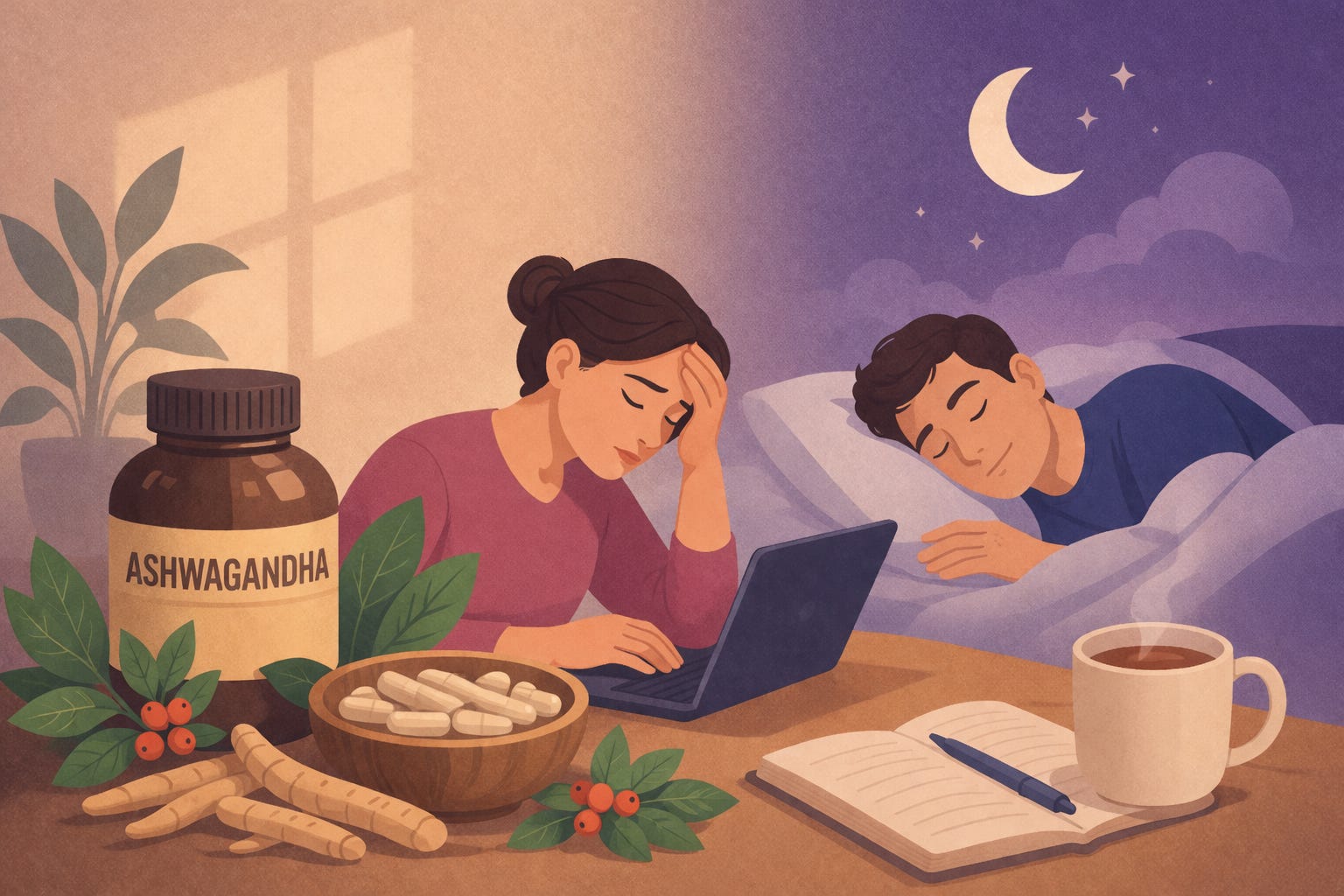
Walk into any wellness store, and you’ll find ashwagandha in half the supplements on the shelf. Your colleague swears by it for stress. Your friend takes it for sleep. Everyone seems to be trying it.
Ashwagandha has gone from an Ayurvedic staple to a modern wellness phenomenon. But here’s the question: does it actually work, or is it just another trend? Let’s dig into what the science says.
What It Actually Is
Ashwagandha (Withania somnifera) is an adaptogen, a plant that helps your body manage stress. It’s been used in Ayurvedic medicine for centuries as a general tonic to improve energy, vitality, and resilience.1
The active compounds are called withanolides, and they’re responsible for most of ashwagandha’s effects. Modern supplements use root extracts standardized to contain specific percentages of these withanolides.
How It Actually Works
Here’s what makes ashwagandha interesting: it works on your stress response at a hormonal level.
When you’re stressed, your body releases cortisol - the primary stress hormone. A little cortisol is fine and actually necessary. But chronic stress means chronically elevated cortisol, which can mess with your sleep, mood, weight, and immune function.
Ashwagandha helps regulate the system that controls your stress hormones. Think of it as the central command center that decides how much cortisol to release and when.2 When this system is overactive (which happens with chronic stress), ashwagandha helps dial it back down. It doesn’t eliminate stress, but it helps your body respond to it more calmly and effectively.
Multiple studies have shown that ashwagandha reduces cortisol levels measurably. In one 60 day study, people taking ashwagandha daily showed significant reductions in morning cortisol compared to placebo.3 Another study found meaningful reductions in both stress scores and cortisol levels.4
What the Research Shows
The science on ashwagandha is actually quite solid, especially compared to most herbal supplements.
A 2024 systematic review analyzing 15 studies with 873 participants found that ashwagandha significantly reduced both anxiety and stress levels.5 These weren’t marginal improvements, they were statistically meaningful reductions in validated stress assessment scales.
For sleep, research suggests ashwagandha improves sleep quality, particularly for people struggling with insomnia. One study found 72% of people taking ashwagandha reported better sleep quality, compared to 29% in the placebo group.6
The key seems to be consistent use. Most studies showing benefits used ashwagandha extracts for 8-12 weeks.7
The Reality Check
Ashwagandha isn’t magic. It won’t fix burnout caused by a hectic work environment or replace the need for good sleep hygiene. What it can do is help your body regulate its stress response more effectively.
It works best as part of a broader approach: good sleep, regular movement, stress management practices, and addressing root causes; not just managing symptoms.
The Bottom Line
So, does ashwagandha actually work? Yes, the research is genuinely compelling, especially for stress reduction and cortisol regulation.
For people dealing with chronic stress, poor sleep, or persistent anxiety, it’s one of the few herbal supplements with real clinical backing. The evidence isn’t just anecdotal - it’s measured, replicated, and statistically significant.
We include ashwagandha in our Multi + Herbs formula as part of a comprehensive blend of adaptogens and nutrients designed to support overall wellbeing. It’s not about jumping on a trend, it’s about including ingredients that genuinely support your body when you need it most.
If you’re curious about ashwagandha, it’s worth exploring. Just make sure you’re getting a quality extract and remember, it’s a tool to support you alongside other healthy habits, not a substitute for addressing what’s actually causing the stress.
Curious about the science behind ashwagandha? Here are the studies and sources that back up what we’ve shared: