

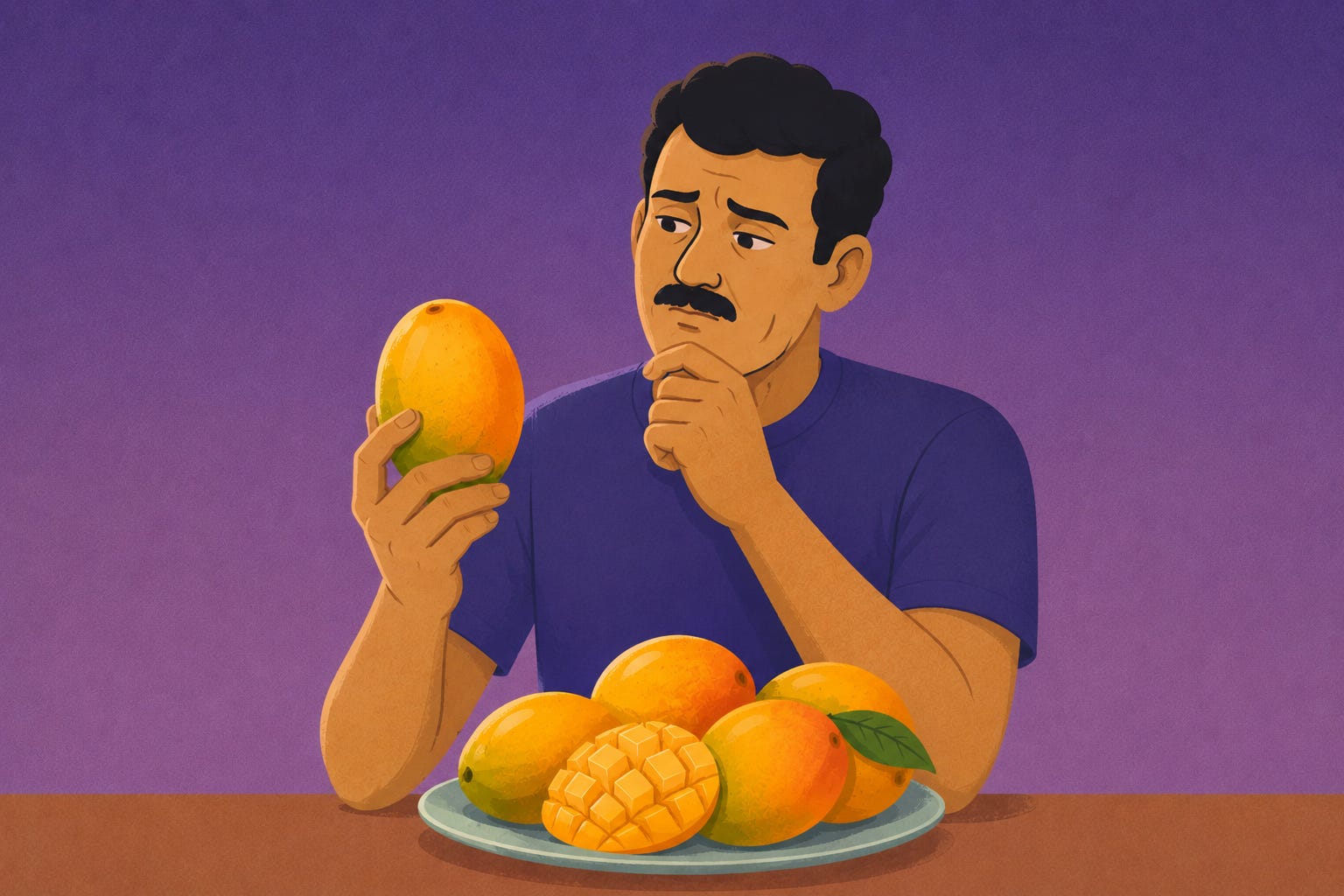
It’s summer, which means mango is everywhere. And with it comes the annual guilt:
“Don’t eat too many, it’s heaty.”
“It’ll spike your sugar.”
“One a day, maximum.”
Here’s the thing about mangoes: they’re neither a superfood nor a villain. The truth is more nuanced and more interesting than either extreme. Let’s talk about what science actually says.
The Mango Paradox: Anti-Inflammatory Compounds, But...
Mangoes contain powerful anti-inflammatory compounds called polyphenols, particularly mangiferin. Research shows these compounds can reduce inflammation at a cellular level, benefiting gut health, liver function, and even cardiovascular health.1,2
So yes, mangoes have anti-inflammatory properties. But here’s the part most people miss: that doesn’t mean eating unlimited mangoes is anti-inflammatory for your body.
One medium mango contains 40-45 grams of sugar.3 While it’s natural sugar (not the same as added sugar in processed foods), your body still processes it as glucose. And when you consume high amounts of sugar regularly even from fruit, it triggers a process called glycation.
The Sugar Problem: AGEs and Inflammation
Here’s what happens: when sugar circulates in your bloodstream, it binds to proteins and fats, forming sticky compounds called Advanced Glycation End Products (AGEs).4 These AGEs accumulate in your tissues over time, causing oxidative stress and chronic low-grade inflammation - the kind linked to joint wear, accelerated ageing, and metabolic issues.5
So while the polyphenols in one mango might be anti-inflammatory, eating multiple mangoes daily all summer creates constant sugar spikes that drive AGE formation and inflammation. The sugar load outweighs the benefits of the polyphenols.
Your body doesn’t react to one day of eating mangoes. It reacts to what you repeat.
The Blood Sugar Reality
Mangoes have a glycemic index (GI) of about 51, technically classifying them as low-GI.6 That’s because they contain fiber (about 3 grams per mango), which slows sugar absorption.3
A study on people with prediabetes found that 300 grams of mango daily for 24 weeks improved blood sugar control compared to a granola bar.7 That sounds promising until you realize 300 grams is roughly one large mango, eaten consistently as part of a controlled diet, not three mangoes on top of your regular meals.
The fiber helps, but it doesn’t erase the sugar. Portion size and frequency matter enormously.
How Much Is Actually Safe?
Here’s the honest, practical guidance:
For most people, one medium mango a few times a week is perfectly reasonable. If you want to eat mango more frequently, choose smaller mangoes or share a large one.
The smarter way to eat mangoes:
Pair with protein or fat: Eat it with nuts, yogurt, or after a meal. This slows sugar absorption and reduces the glucose spike.8
Don’t eat it alone on an empty stomach: this causes a faster blood sugar rise and bigger AGE formation.
Timing matters: Have it during breakfast or lunch, or after physical activity when your body processes sugar more efficiently. Avoid right before bed.9
Skip the juice: Mango juice concentrates the sugar and removes the fiber.
If you have diabetes, prediabetes, or joint issues: Limit to one medium mango 2-3 times per week and pair it with protein.10 Monitor how your body responds. If you’re managing joint health specifically, be extra cautious - the AGE formation from repeated sugar spikes directly impacts cartilage over time.4
The Bottom Line
Mangoes aren’t bad. They’re packed with vitamins A and C, fiber, and beneficial polyphenols.
But they’re also high in natural sugar. And natural doesn’t mean you can eat unlimited amounts.
Here’s a simple way to think about it: you wouldn’t eat five apples a day, every day, for three months straight. You wouldn’t have bananas at every meal all season long. We instinctively rotate fruits and eat them in moderation.
Mangoes deserve the same approach.
Half a mango, a few times a week, paired with protein or nuts? Perfectly fine for most people.
But three mangoes daily, all summer long, on top of your regular meals? That’s when the sugar load starts driving inflammation and blood sugar issues - no matter how “natural” the source.
Enjoy your mango. Just treat it like you would any other fruit: with portion control and balance.
For the curious, here are the references behind the nuance: