

Walk into any health store and you’ll see rows of collagen powders. Scroll through Instagram and influencers are stirring it into their morning coffee. Your friend swears it helped her knee pain. The label promises stronger joints, less stiffness, and better cartilage.
But here’s what you’re actually wondering: is this just expensive protein powder, or does collagen actually do something special for your joints?
The answer is more nuanced than the marketing suggests.
What Collagen Actually Is
Collagen is a protein that makes up your cartilage, the cushioning between your joints. It’s also in your skin, bones, and tendons. As you age, your body produces less collagen naturally. That’s partly why joints get stiffer and cartilage wears down over time.
The theory behind collagen supplements is simple: if you eat collagen, your body will use it to rebuild cartilage and improve joint health. Sounds logical. But your body doesn’t quite work that way.
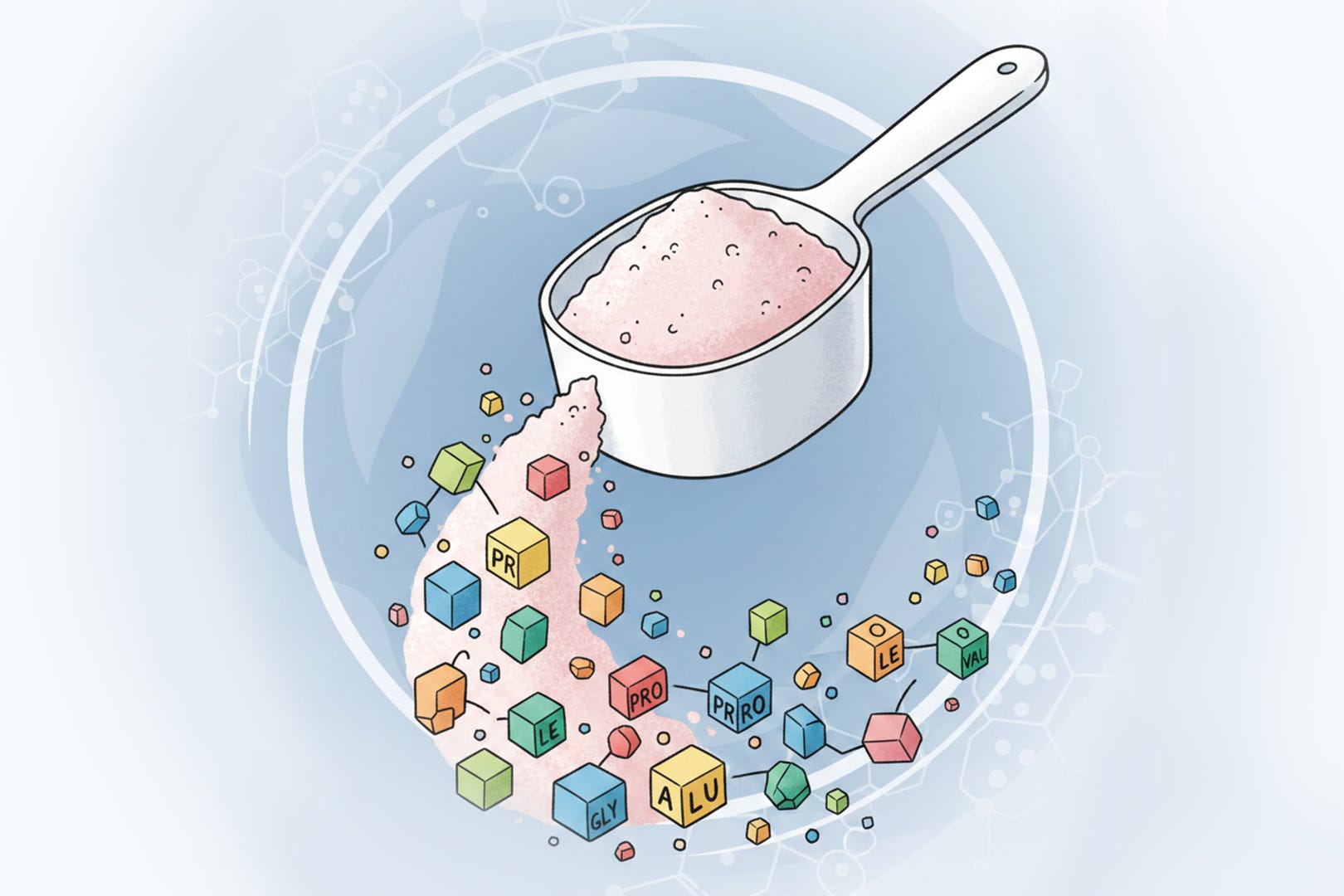
When you eat collagen, your digestive system breaks it down into amino acids, just like any other protein. Your body then uses those amino acids wherever it needs them, not necessarily in your joints. There’s no guarantee that the collagen you swallow ends up as collagen in your knees.
What the Research Shows
Here’s where it gets interesting. Some studies do show benefits, but with specific types of collagen. Type II collagen, which comes from chicken cartilage, has shown modest improvements in joint pain and stiffness in people with osteoarthritis.1,2 The benefit is real but not dramatic. Moreover, scientists still don't fully understand how it works or why some people respond better than others.
Type I collagen, which is more common in most supplements and comes from bovine or marine sources, has weaker evidence for joint health. It might help skin and bones, but for joints specifically, the research is mixed at best.3
The studies that show positive results often use specific dosages, usually 8 to 12 grams daily, taken consistently for at least three months. Taking a scoop here and there won’t do much.
The Bottom Line
If you have joint pain and want to try collagen, here’s what matters. Look for Type II collagen specifically if joint health is your goal. Take it consistently for at least 12 weeks before deciding if it works. Expect modest improvement, not a miracle.
But also know this: you can support collagen production naturally through food. Eating enough protein gives your body the amino acids it needs to make collagen. Animal sources like chicken, fish, eggs, and bone broth provide these amino acids efficiently. But vegetarian sources work too. Beans, lentils, tofu, and soy provide amino acids like glycine and proline that your body uses to build collagen. Pairing these with vitamin C-rich foods like citrus, bell peppers and tomatoes helps your body make its own collagen.4 Nuts and seeds also provide zinc and copper, minerals that support collagen synthesis.
So is collagen worth Rs. 2000 a month? Maybe, if you choose the right type and set realistic expectations. But it’s not magic. It’s protein with some potential, not a guaranteed fix. And sometimes, a well-rounded diet does the job just as well, without the hefty price tag.
Curious about the science behind collagen and joint health? Here are the studies and sources that back up what we’ve shared: