

You’ve heard it a hundred times. Carbs make you fat. Carbs spike your blood sugar. Carbs are bad. So you cut them out. Or you feel guilty every time you eat rice or roti.
But here’s what’s interesting. People in cultures that eat rice or roti with every meal often stay healthy and lean. Meanwhile, others eating the same foods struggle with weight, energy crashes, and blood sugar issues.
The difference isn’t the carbs themselves. It’s how they’re eating them.
Carbs Alone vs. Carbs with Company
When you eat carbs by themselves, your blood sugar rises quickly. A bowl of plain white rice. A piece of toast with nothing on it. A handful of biscuits between meals. Your body absorbs the sugar fast. Your blood sugar spikes. Insulin rushes in to bring it back down. Often too quickly. You feel tired. Hungry again soon. Craving more carbs.
But when you eat those same carbs with protein, fat, and fiber, everything slows down. The fiber adds bulk and slows digestion. The protein and fat delay how quickly sugar enters your bloodstream. Your blood sugar rises gradually. Stays stable longer. You feel satisfied. Energized. Not hungry an hour later.
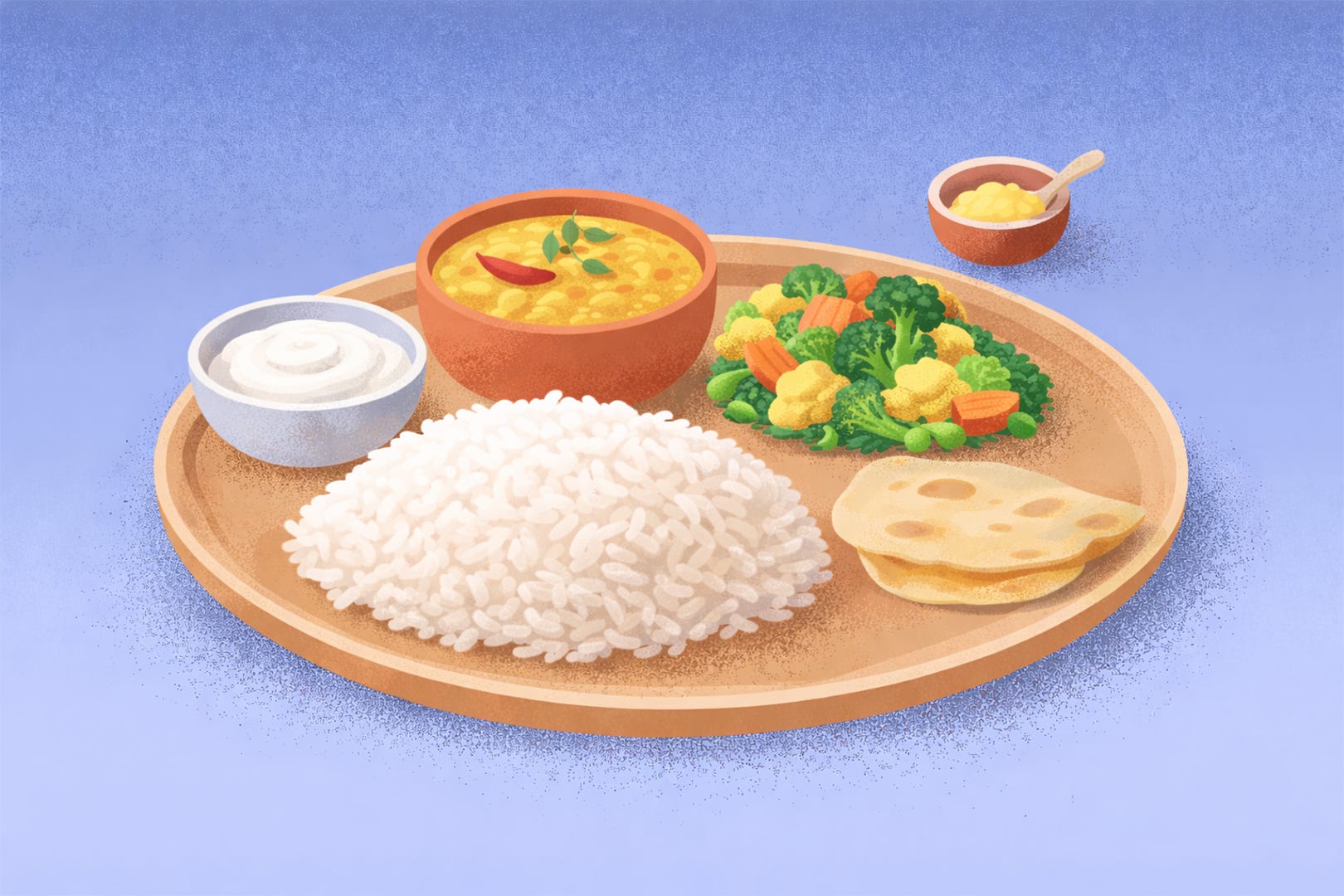
This is why a bowl of dal with rice affects you differently than plain rice. Why roti with paneer sabzi keeps you full longer than roti alone. The carbs are the same. But the combination changes everything.
Timing Matters Too
Your body handles carbs better at certain times of the day. In the morning and after exercise, your muscles are more sensitive to insulin. They’re ready to pull sugar from your bloodstream and use it for energy. Eating carbs at these times is efficient. Your body uses them well.
Late at night, especially if you’ve been sitting all day, your body is less responsive to insulin. The same carbs that would have been used for energy earlier now have nowhere to go. They’re more likely to be stored as fat or keep your blood sugar elevated longer, affecting your sleep.
This doesn’t mean never eat carbs at night. It means being smarter about it. If you have carbs for dinner, pair them with protein and vegetables. Keep portions moderate. And if possible, take a short walk after eating. Movement helps your muscles use that sugar instead of letting it sit in your bloodstream.
The Type of Carb Matters
Not all carbs behave the same way. Refined carbs like white bread, maida, or white rice break down quickly. Whole grains like brown rice, oats, whole grain flours or millets break down more slowly because of their fiber content.
But even refined carbs become less problematic when you eat them the right way. White rice with dal, vegetables, and a little ghee behaves very differently than white rice eaten alone or with just a potato curry.
The key isn’t avoiding carbs. It’s understanding how to work with them.
What Actually Works
If you want carbs to work for you instead of against you, here’s what makes a difference.
Pair carbs with protein and fat. Never eat carbs by themselves, especially refined ones. Add dal, paneer, eggs, chicken, or nuts. Include vegetables for fiber.
Eat carbs earlier in the day. Your body handles them better in the morning and afternoon than late at night.
Move after eating. A 10 to 15 minute walk after meals helps your muscles use the sugar. Even light movement makes a difference.
Choose whole grains when possible. Brown rice, oats, jowar, bajra, and ragi digest more slowly than white rice or maida. But if you’re eating white rice, just make sure it’s part of a balanced meal.
Don’t fear carbs. Just don’t eat them alone. Your body needs carbs for energy, especially your brain. The problem isn’t the carb. It’s eating it in isolation without the balance your body needs.
The Takeaway
Carbs aren’t the enemy. Neither is rice, roti, or even the occasional piece of bread. What matters is how you eat them. Alone, they spike your blood sugar and leave you hungry. With protein, fat, and fiber, they become a stable source of energy that keeps you satisfied.
It’s not about cutting carbs. It’s about eating them smarter.