

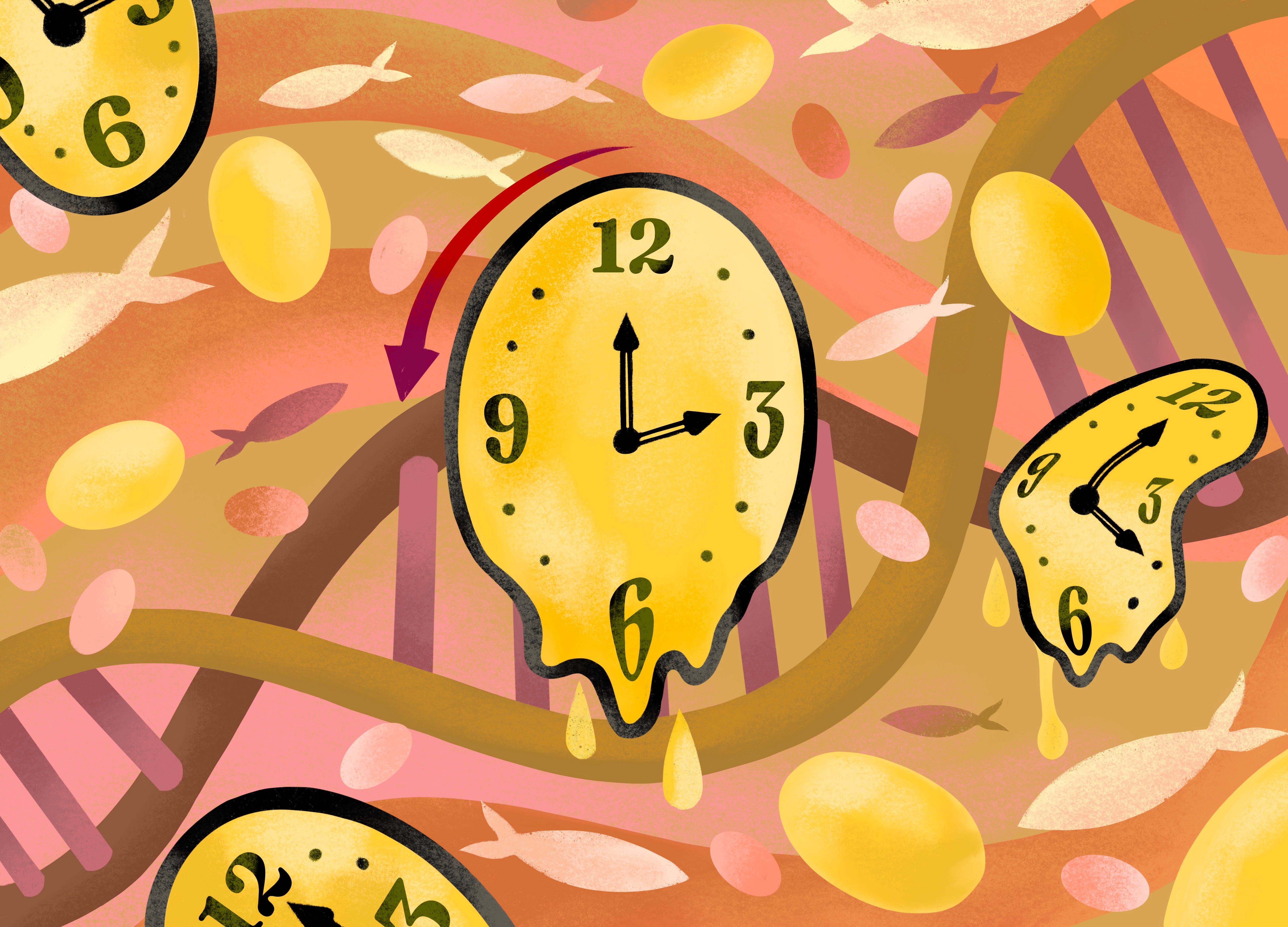
Picture this - Your body has trillions of tiny clocks quietly ticking inside it. You cannot hear them, but they show up in your cells. Each time a cell divides, these clocks move forward just a little. Over the years, those ticks add up, and your body begins to feel the weight of age.
Growing evidence points to Omega-3 fatty acids as key nutrients that may help slow the ticking of these cellular clocks. Some studies even suggest they might rewind them slightly.
So what is really happening here?
Inside every cell there is a structure called a telomere. You can imagine telomeres as the plastic tips at the ends of shoelaces. They sit at the ends of your DNA strands and keep everything safe and intact. Just as shoelace tips fray over time, telomeres become shorter every time your cells divide. The shorter they get, the harder it is for cells to function properly. This is why scientists often use telomere length as a measure of biological age, which tells us how old the body is on the inside regardless of how many birthdays we have celebrated.
This is where Omega-3s come in. Research has shown that people with higher levels of Omega-3 in their blood tend to have longer telomeres. One well-known study from the University of California followed heart patients for five years and found that those with the highest Omega-3 levels had much slower telomere shortening compared with those who had the lowest levels. In simple terms, the cells of people with more Omega-3 aged more slowly.
But how can a fat do something so powerful?
Omega-3s are anti-inflammatory nutrients. Inflammation caused by stress, poor diet, or even pollution speeds up the shortening of telomeres. Omega-3s calm this inflammation and also reduce oxidative stress, which is another form of cellular damage. By creating a healthier environment inside the body, Omega-3s help protect DNA from fraying, giving your cells more time on their internal clock.
This does not mean Omega-3s are a magic time machine. You cannot take a capsule today and wake up tomorrow ten years younger. What the science does suggest is that regularly nourishing your body with Omega-3s may help extend your healthspan, which is the number of years you feel strong, active, and energetic.
Here is the challenge - Most Indian diets are naturally low in Omega-3. Our cooking oils are usually rich in Omega-6, such as sunflower, safflower, soybean, or rice bran oil. Too much Omega-6 without enough Omega-3 can increase inflammation in the body. Vegetarian diets add another layer of difficulty, since the richest food sources of Omega-3 are oily fish like sardines, mackerel, and salmon, which are not eaten regularly in most parts of India.
Yes, plant foods like flaxseeds, chia seeds, and walnuts do contain Omega-3, but in a form called ALA. The body has to convert ALA into the usable forms of Omega-3, EPA and DHA, and this conversion is very limited. In fact, less than 5 percent of ALA usually gets converted.
So what can you do if you want to protect your cellular clock?
One option is to eat oily fish such as sardines, mackerel, or salmon two to three times a week.
If you are vegetarian or do not eat fish, you can choose algae-based Omega-3 supplements, which directly provide DHA.
And if your diet still does not give you enough, a high-quality Omega-3 supplement can help fill the gap.
We cannot stop time from moving forward, but we can give our cells the tools to move more slowly. And sometimes, slowing the clock is the closest we can get to turning it back.