

You’ve been told your entire life: drink milk, take calcium supplements, and your bones will be strong.
It’s the most confident health advice we’ve ever received. It’s also incomplete.
High calcium intake doesn’t guarantee strong bones. Some populations with the highest calcium consumption have the highest fracture rates. Researchers call it the calcium paradox.1
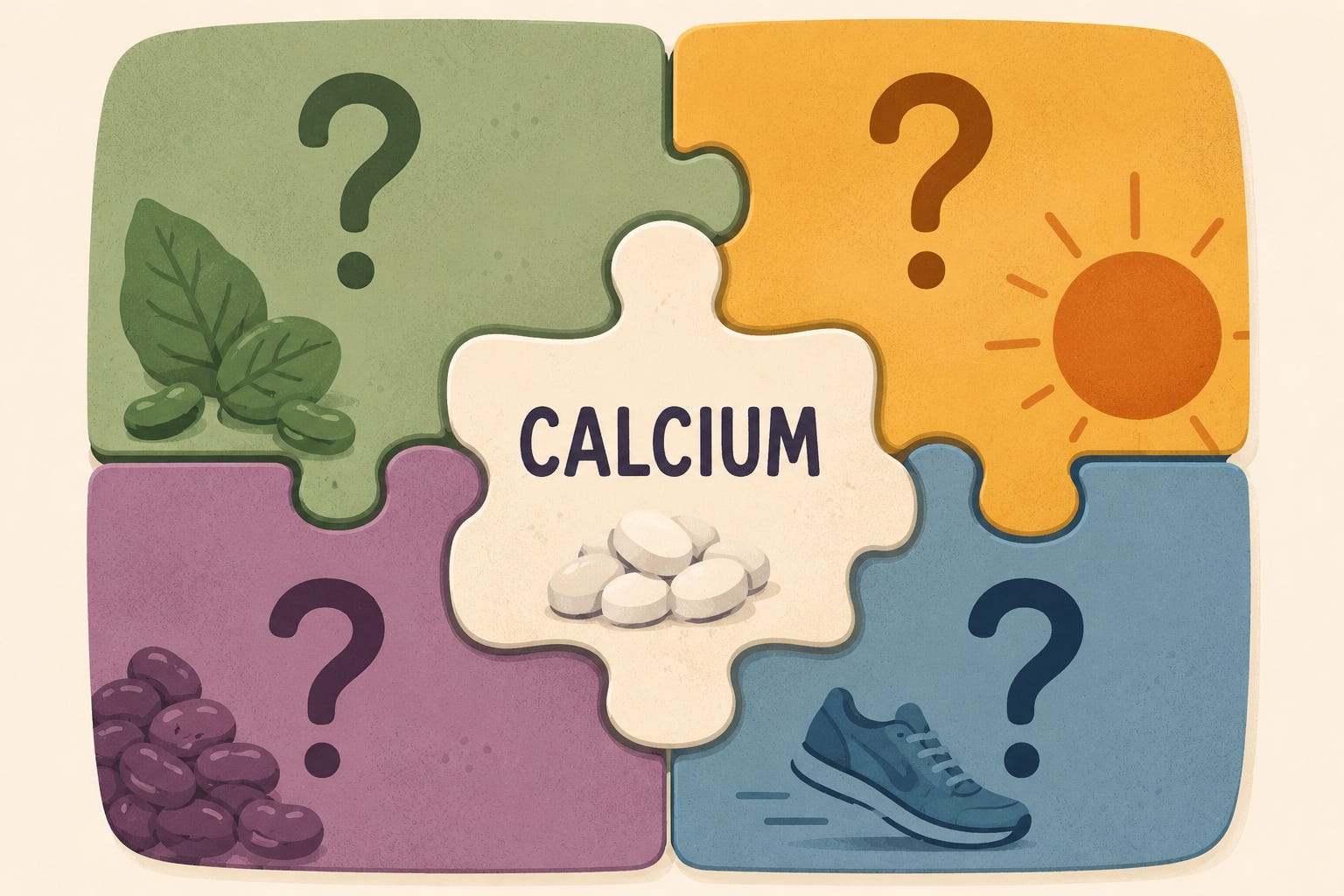
The missing pieces? Vitamin K2, magnesium, and vitamin D working together.
The Study That Changes Everything
Osteoporotic women received 150 mg of calcium daily. Nothing happened. They continued losing bone density - about 3% per year.
A different group received the same 150 mg of calcium PLUS 45 mg of vitamin K2.
Result: bone density stabilized. No more loss.2
Same calcium. Completely different outcome.
A meta-analysis of 2,570 postmenopausal women confirmed it: K2 supplementation significantly increased bone-building markers and reduced bone breakdown.3
Why Calcium Alone Fails
Calcium is essential, but it doesn’t know where to go in your body. Without vitamin K2, calcium scatters everywhere - into bones (good), but also into arteries (bad), kidneys (bad), and soft tissues (bad).4
Vitamin K2 activates a protein called osteocalcin, which acts as calcium’s GPS. It says: “Go to the bones.”
K2 deficiency is widespread in modern diets. It’s found mainly in fermented foods and certain cheeses - foods that have largely disappeared.5
You’ve been taking calcium while deficient in the nutrient that tells calcium where to actually go.
Magnesium: The 60% Nobody Mentions
Here’s what infuriates bone health experts: 60% of the magnesium in your body is stored in your bones.6 And we barely talk about it.
Magnesium does two critical things:
First: It’s part of your bone structure. Low magnesium = mechanically weaker bones, even if calcium is high.7
Second: It activates vitamin D and parathyroid hormone - the regulators of calcium. Without magnesium, calcium supplements can’t work efficiently.8
Most modern diets flip the calcium-to-magnesium ratio. We get far more calcium than magnesium. The optimal ratio is 2:1, but we’re often 4:1.
Result? Magnesium deficiency is linked to lower bone density, accelerated bone loss, and higher fracture risk, especially in women over 35.9
The Real Bone Formula
Bones aren’t built on calcium alone. They’re built on a system:
Vitamin K2: Directs calcium where it needs to go
Magnesium: Provides structural support and activates vitamin D
Vitamin D: Enables calcium absorption
Movement: Tells bones they’re needed and triggers strengthening
Skip any one of these, and bone health suffers. Take them together? Fracture risk drops significantly.10
Why Women Over 35 Need to Know This
After perimenopause, bone loss accelerates. Estrogen decline triggers rapid bone turnover. This is when high calcium alone becomes dangerously insufficient.
Studies on postmenopausal women show that K2 becomes particularly protective during this phase.11 Magnesium deficiency (often completely undiagnosed) becomes a real problem. K2 supplementation shows its clearest benefits.
Here’s What Actually Works
Stop obsessing over calcium quantity. Start focusing on the system:
Vitamin K2: 45-180 µg daily
Magnesium: 300-400 mg daily
Vitamin D: 1000-2000 IU daily
Calcium: 1000-1200 mg daily (adequate, not excessive)
Movement: Weight-bearing activity 30+ minutes most days
This is the evidence-based approach to bone health. Not calcium worship. Nutrient synergy.
Your Bones Aren’t Weak. They’re Undernourished.
If you’ve been taking calcium for years and still worried about osteoporosis, you now know why: you’ve been missing the other 70% of the equation.
Your bones don’t need more calcium. They need K2, magnesium, and vitamin D working together.
That’s when fracture risk actually drops.
That’s when bones get strong.
For the curious, here are the references behind the research mentioned above: